Selected Work 20 – 26.
Challenge
A large global vaccines business wanted to understand what its biggest hospital and health-system customers actually needed from it as a partner, before deciding what to build. The question was not what to put on a screen — it was how the business should serve accounts that drive two-thirds of its US sales.
Approach
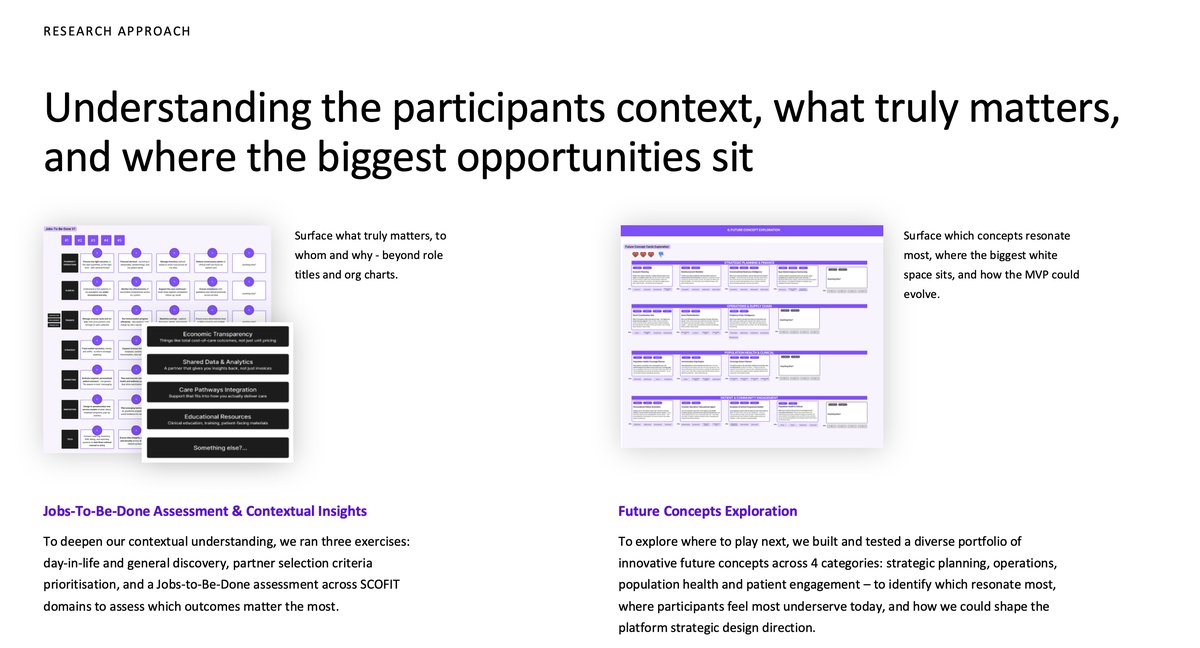
- We took a user-centred approach from the start: rather than beginning with the platform's features, we began with the daily reality of the people who would use it. We led in-depth interviews with senior decision-makers, including chief medical information officers, pharmacy directors, and chiefs of infectious disease, across US health systems, exploring their routines, frustrations, and what earns their trust.
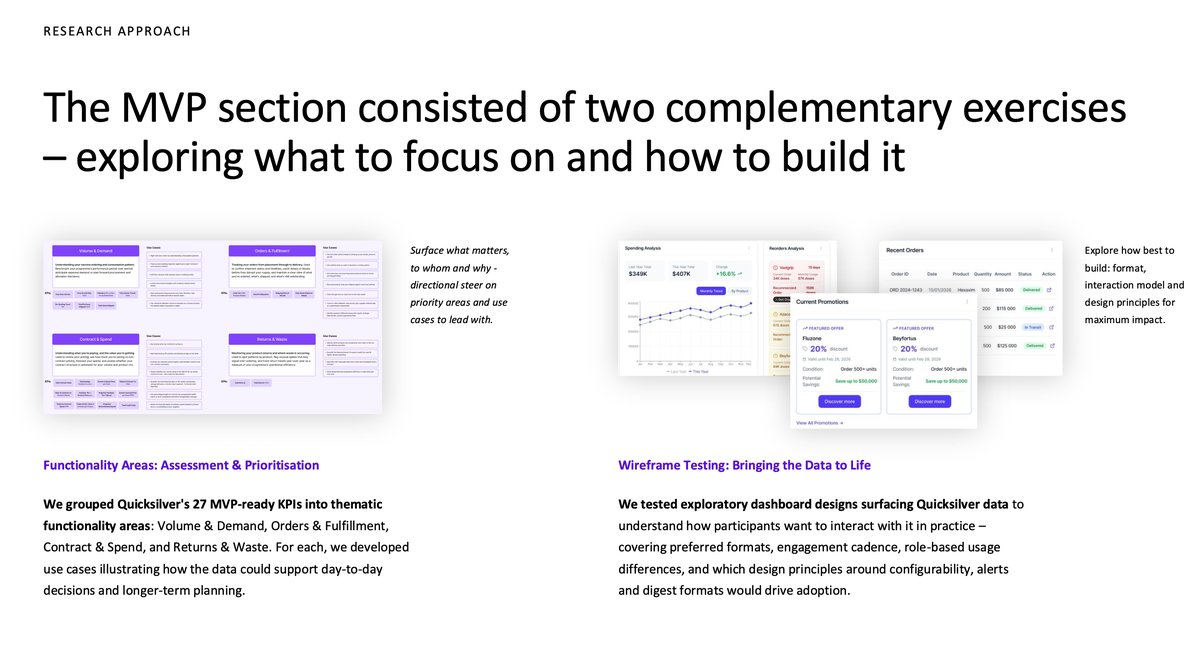
- To simplify a sprawling set of possibilities, we grouped everything the platform could do into four plain-language categories: tracking demand, managing orders, handling contracts and spend, and reducing waste, giving the whole team a shared frame for deciding what to build first.
- We tested early service concepts with the same leaders, using their reactions to settle questions of format, frequency and fit with real workflows rather than debating them internally.
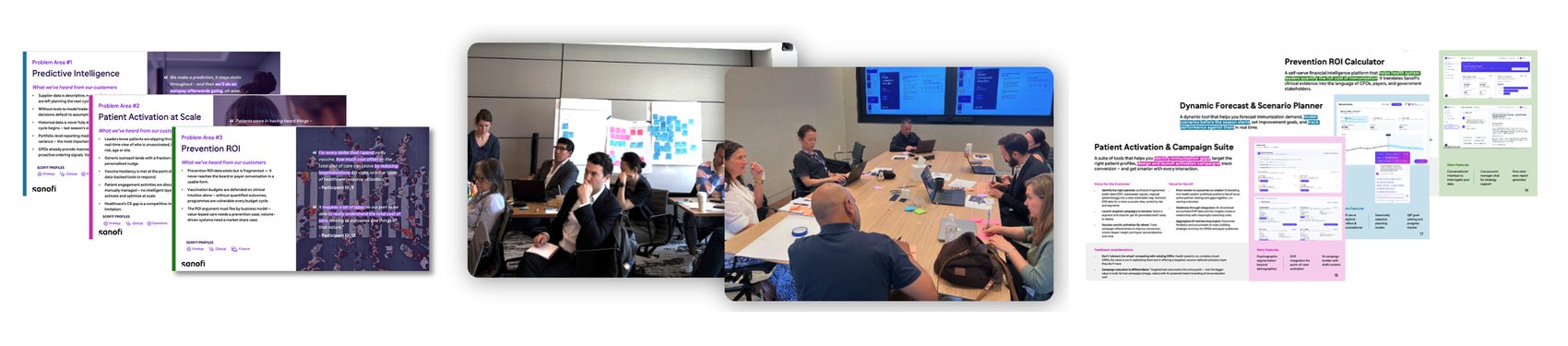
- The programme closed with a co-creation hackathon: business, digital and design teams built working prototypes from the research in a single day, then merged their ideas into one shared vision for the platform, a piece of facilitation designed to turn insight into ownership.
Outcome & Impact
Strategic accounts drive 67% of this business's US vaccine sales (around $2.9bn), so getting the first version right carried real commercial weight. The research showed the clearest early priority was demand tracking, which directly set the scope and sequence of what was built next.
Challenge
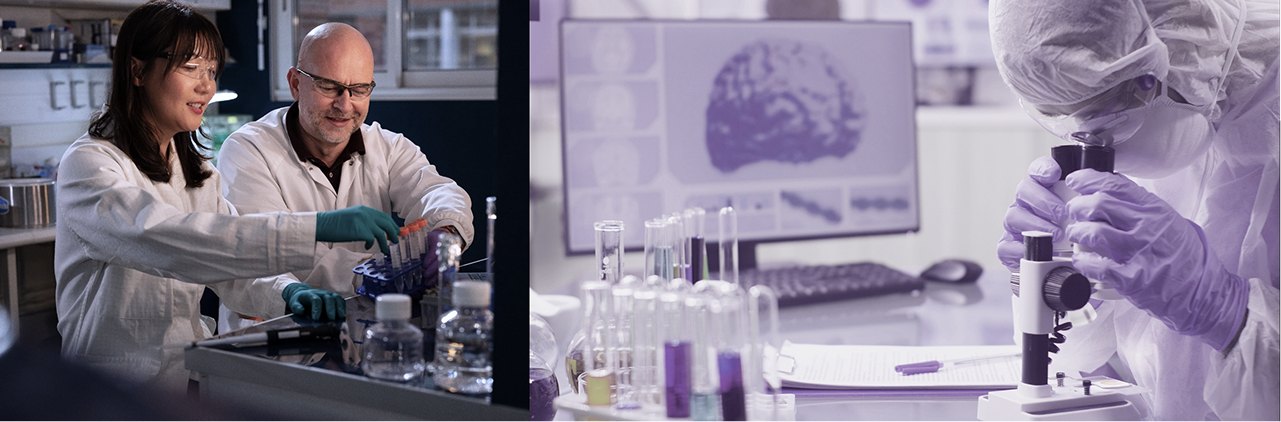
Before committing to a billion-dollar digital transformation, a global pharmaceutical company's research leadership needed to actually see their entire drug-discovery process, from early lab work through to manufacturing readiness, because no one had ever mapped it as one connected system.
Approach
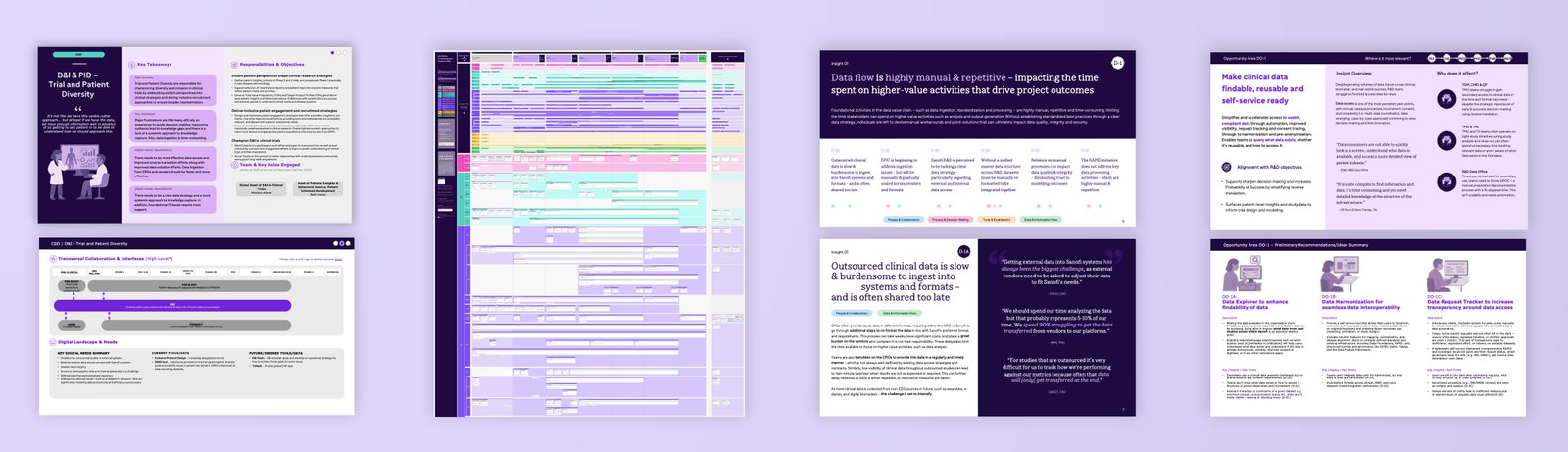
- This was systems thinking applied to one of the most specialised environments in the world: our task was to make a system visible that even the people inside it couldn't see the whole of.
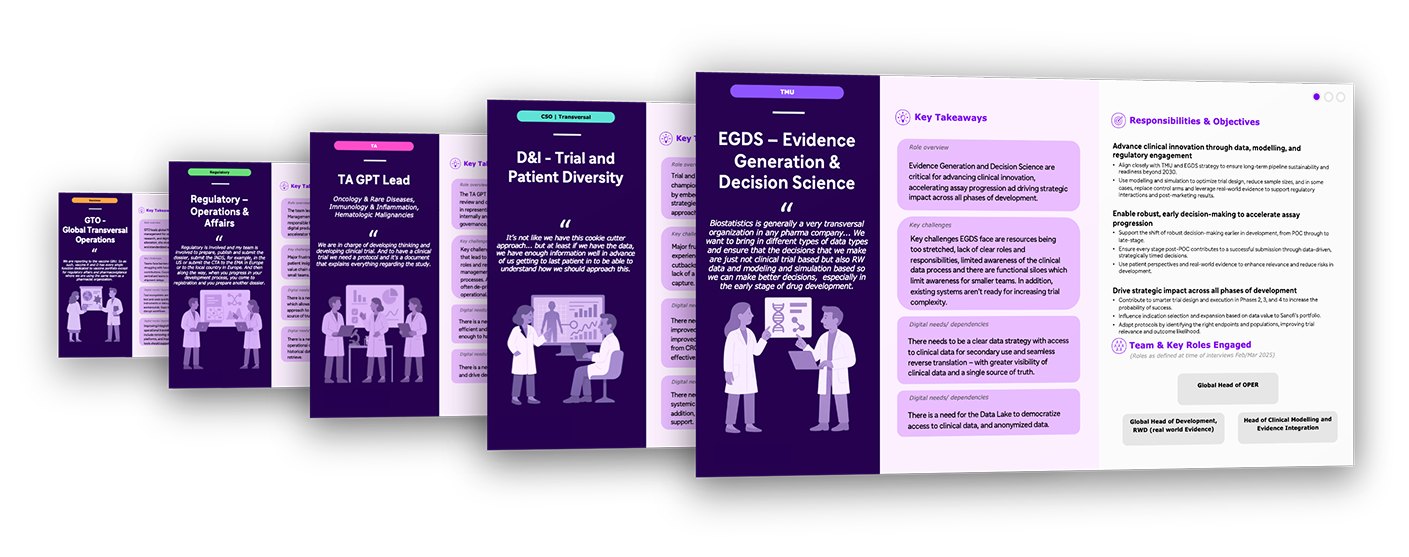
- We combined depth and breadth: in-depth interviews with senior scientists and PhDs across five specialist research areas, alongside a wider survey reaching around 190 people, balancing scientific rigour with genuinely human conversation, in an organisation encountering design research for the first time.
- We ran participatory workshops with each specialist group, so the people doing the work surfaced where processes, tools and data were breaking down, rather than having outsiders diagnose it for them.
- We partnered with VP-level scientists who acted as translators, helping us earn trust and get the language right with a deeply expert audience, a deliberate part of the research design.
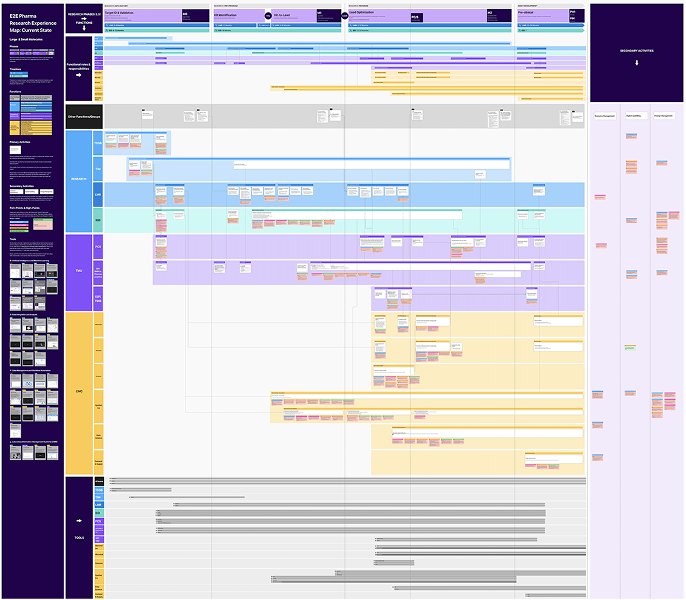
- We then synthesised everything into the organisation's first single, end-to-end experience map of its research journey, simplifying an enormously complex system into something leadership could actually reason about and act on.
Outcome & Impact
The organisation received its first end-to-end map of its research process, surfacing both the functional pain points inside individual scientific disciplines and the cross-functional ones where handoffs between teams broke down. Working with the client's own team, we prioritised those pain points and used that prioritisation to shape a set of opportunity areas, giving the digital transformation programme a clear, evidence-based view of where to focus first rather than trying to fix everything at once. That prioritisation fed directly into the roadmap for the transformation programme. The headline insight, that the organisation was "digitally ambitious, but humanly unfocused," reframed the whole programme, shifting it from a pure technology rollout to one built around how people actually work.
Challenge
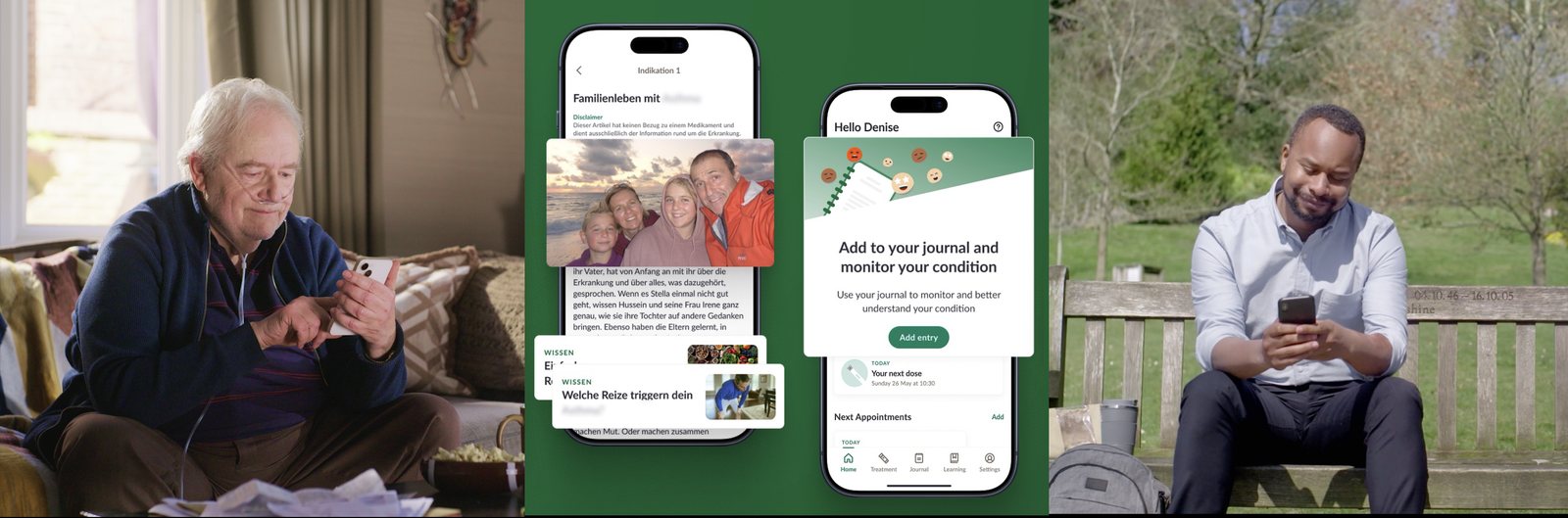
People managing chronic respiratory and skin conditions on long-term injectable treatment, and the clinicians supporting them, needed more than clinical care. Sanofi wanted a genuinely joined-up experience across very different healthcare systems worldwide — spanning the clinic, the nursing support around it, the pharmacy, and the routines patients build at home.
Approach
- This was ecosystem research at global scale: understanding not just an app, but the whole web of relationships (patients, doctors, nurses, pharmacists, support programmes) that shapes how patients with chronic conditions live. We led the patient and healthcare-professional research in four of the programme's markets: Canada and China in 2024, then France and Spain in 2025–26.
- In each market, we ran in-depth interviews with patients and clinicians to understand the daily reality of living with the condition and managing injections, and how that reality differs across health systems and cultures.
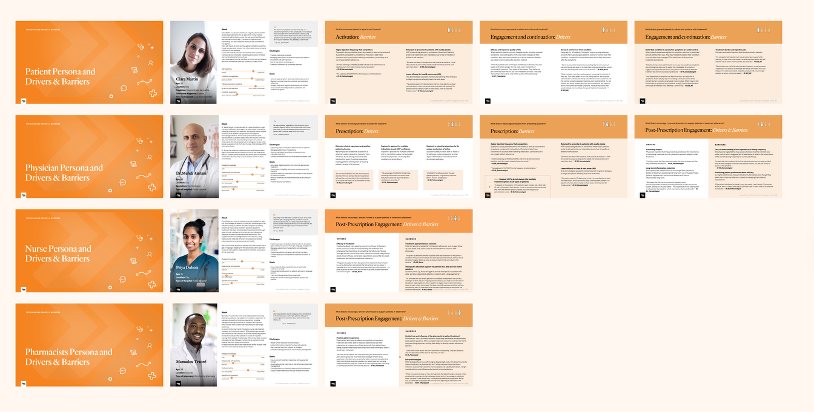
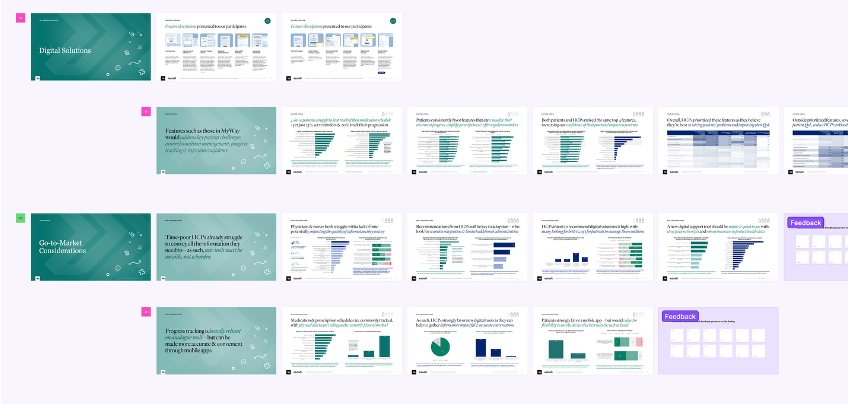
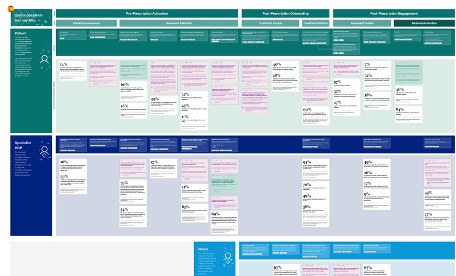
- We mapped patient journeys market by market, then distilled the findings into personas, clear statements of what would actually help, and market-specific launch recommendations, turning four countries' worth of complexity into decisions the team could act on.
- This work fed directly into the design and rollout of the Dupixent MyWay companion app, within a wider frog team whose research programme also covered USA, Germany, Japan, the Gulf and other markets over several years.
Outcome & Impact
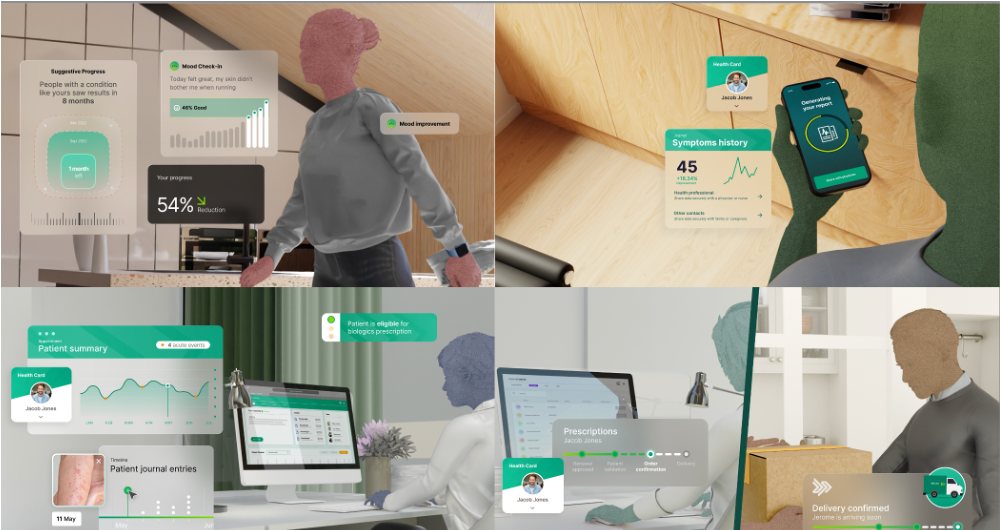
We designed a full care ecosystem around Connected Disease Management: nurse champions, HCP-specific materials, injection-confidence rituals, renewal coordination, and the physician-side tools that hold it together. Dupixent MyWay is the part of it patients hold in their hands, and gives a sense of the ecosystem's reach: 20,000+ registered users, 117,000+ recorded injections, 4.45/5 patient satisfaction. This project won a 2026 iF Design Award and a Red Dot Design Award for Service Design (to be announced in the autumn).
Challenge
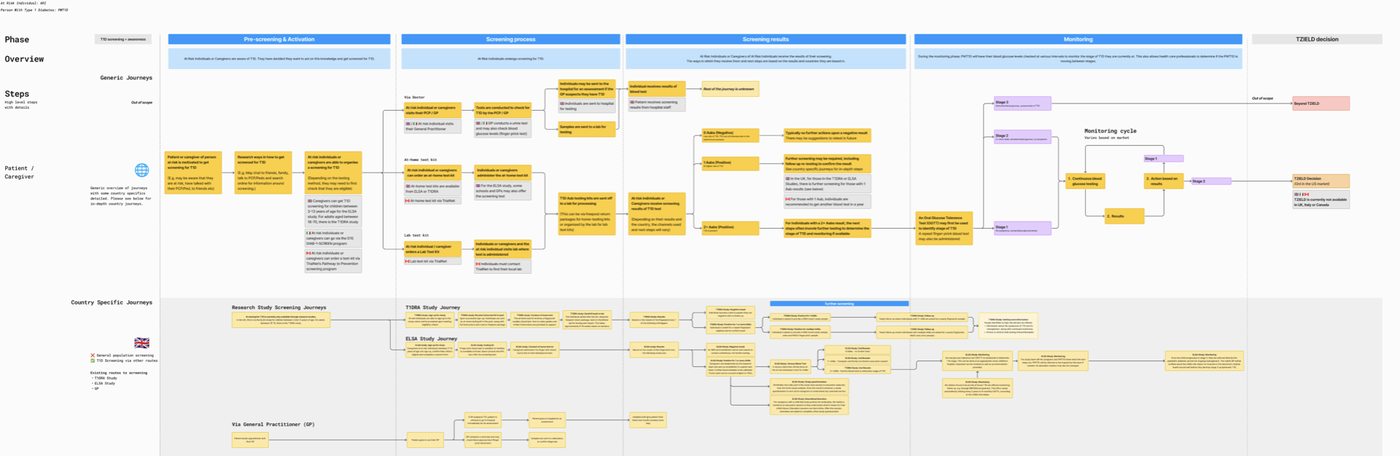
Sanofi wanted to help people at risk of Type 1 Diabetes get diagnosed earlier, before symptoms became serious, as well as their caretakers throughout their journey. A number of ideas were already on the table internally, but none had been tested with real people yet.
Approach
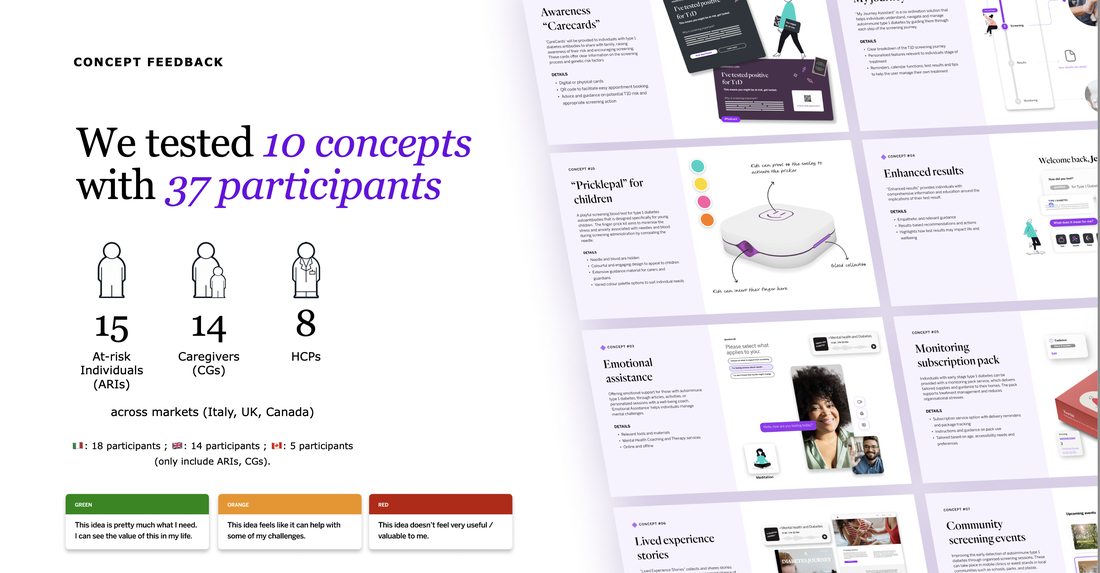
- We grounded everything in the lived experience of the people this was for: interviews with 15 people at risk of Type 1 Diabetes, 14 caregivers, and 8 healthcare professionals across Italy, the UK and Canada, exploring what would actually prompt someone to seek screening early.
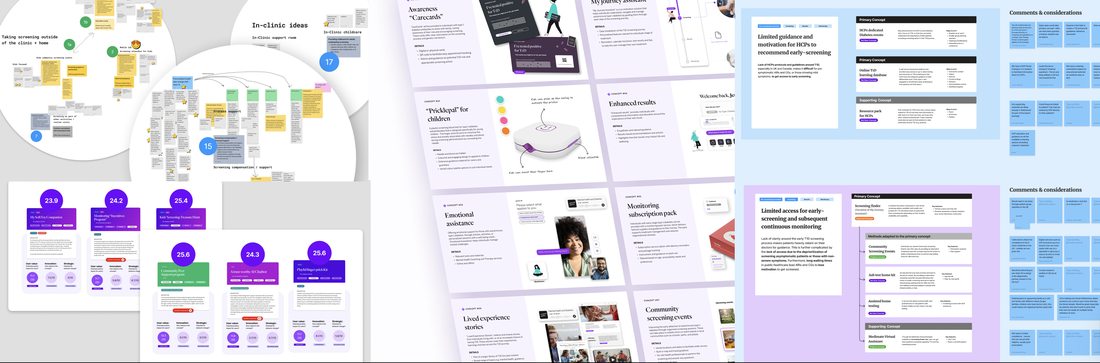
- Through co-creation workshops with Sanofi's team, we narrowed 20 early concepts down to the 10 most promising, using facilitation to build shared conviction, not just a shortlist.
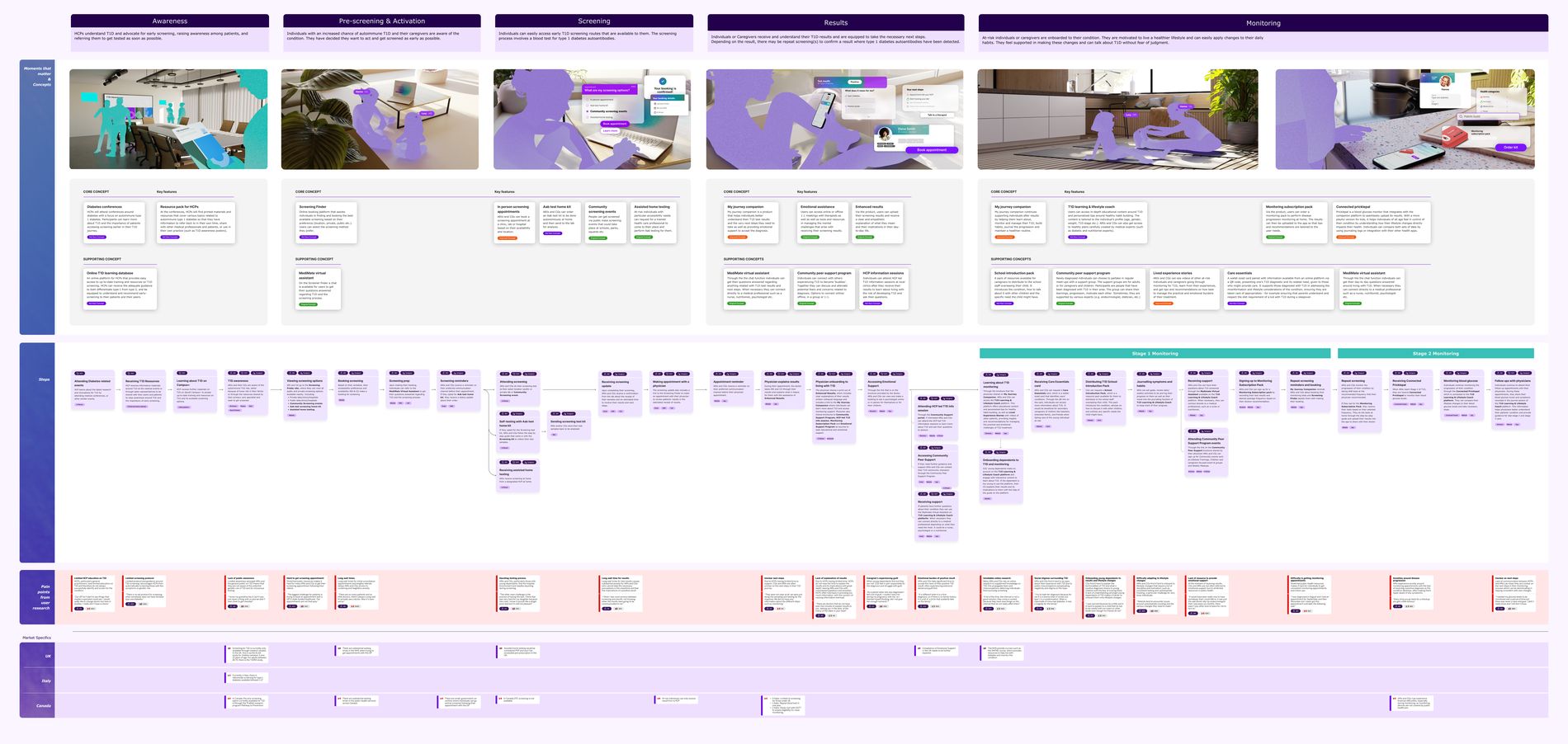
- We tested those 10 concepts with 37 people, and used the findings to identify the four moments that matter most on the path to early detection.
Outcome & Impact
Sanofi received a three-year vision for supporting earlier detection of Type 1 Diabetes, mapping the path from first awareness through to ongoing monitoring, designed to help at-risk people and their caregivers get screened sooner and delay a full diagnosis. The concepts developed for this project won a 2026 iF Design Award for Service Design.
Challenge
During the cost-of-living crisis, a UK energy provider was seeing rising complaints and wanted to rebuild trust, both by improving the customer experience itself and by building a stronger internal team capable of keeping it improving after we left.
Approach
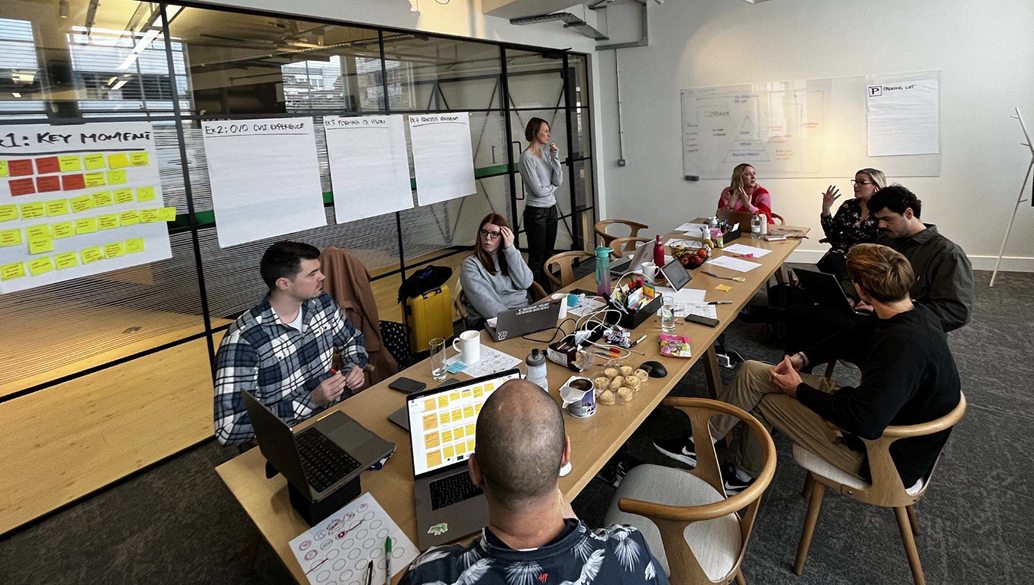
- This project ran as two connected streams, one designing the experience, one building the organisation behind it, which I was involved in, because a vision without the capability to deliver it doesn't survive contact with reality.
- On the experience side, the team ran customer research, built a set of research-led customer profiles to replace the client's old assumption-based ones, and mapped the company's full customer journey for the first time, feeding a company-wide CX vision and roadmap.
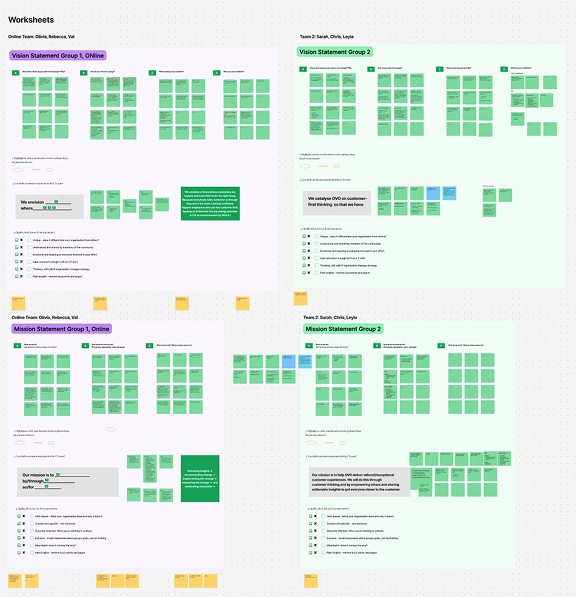
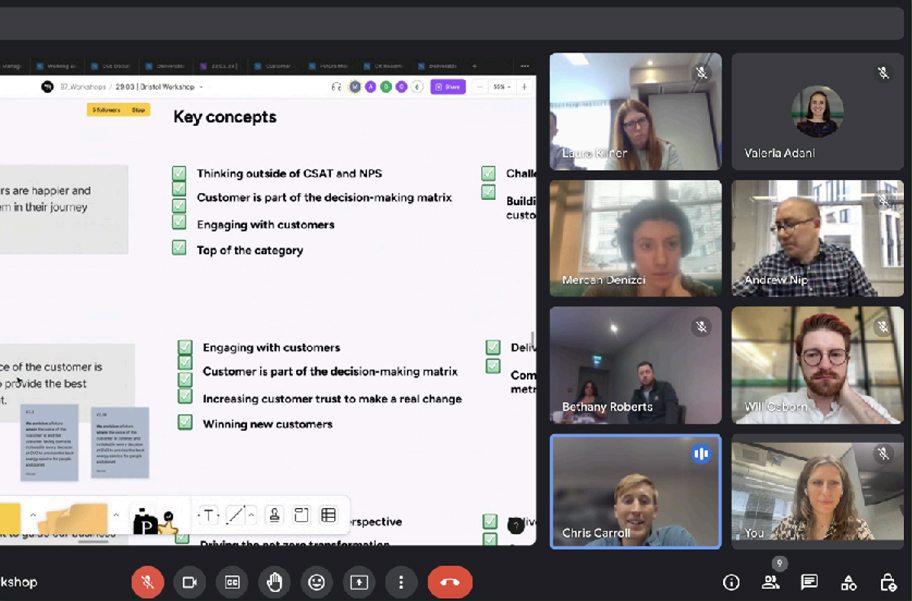
- We turned those findings into a company-wide customer experience vision, principles, and roadmap through co-design workshops with the client's own team.
- On the organisation design side we coached the client's internal team through customer research, synthesis, journey mapping and design tools on their own live project, so the capability stayed with them rather than leaving with us.
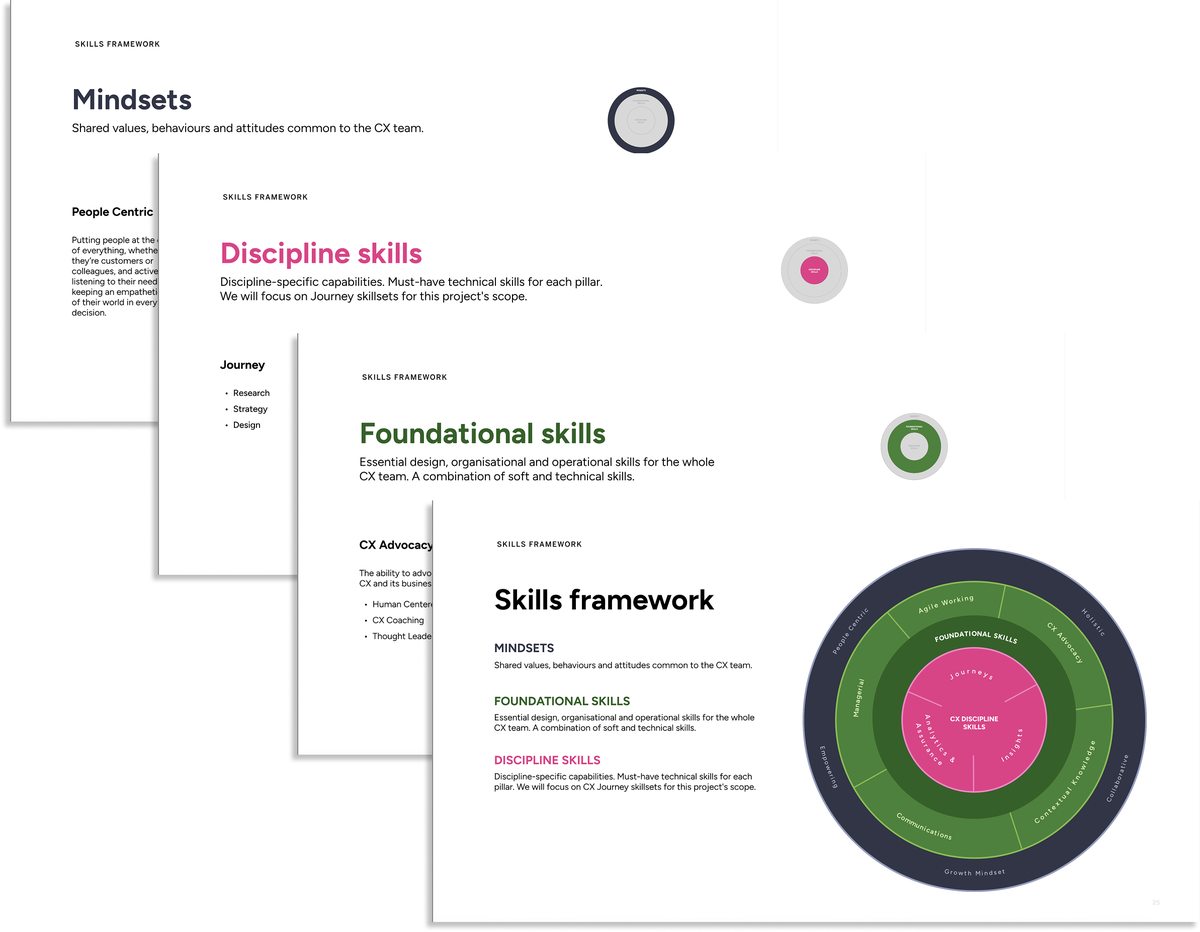
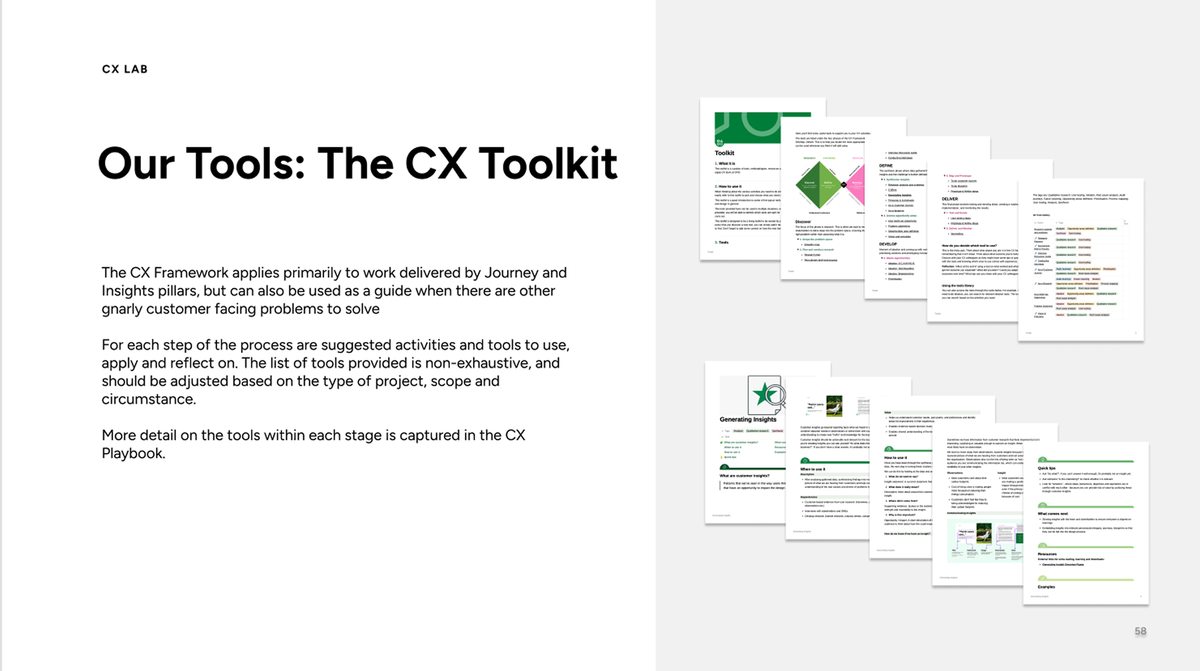
- We also developed a shared skills framework and a practical playbook the team could keep using and evolving on their own.
Outcome & Impact
The client received a single customer experience vision, a 27-skill competency framework, and 25 practical tools built into a live playbook. We put the foundations in place for their CX team to run independently: the processes, training and hands-on practice to lead their own research and design, and to grow and champion CX across the organisation.
Challenge
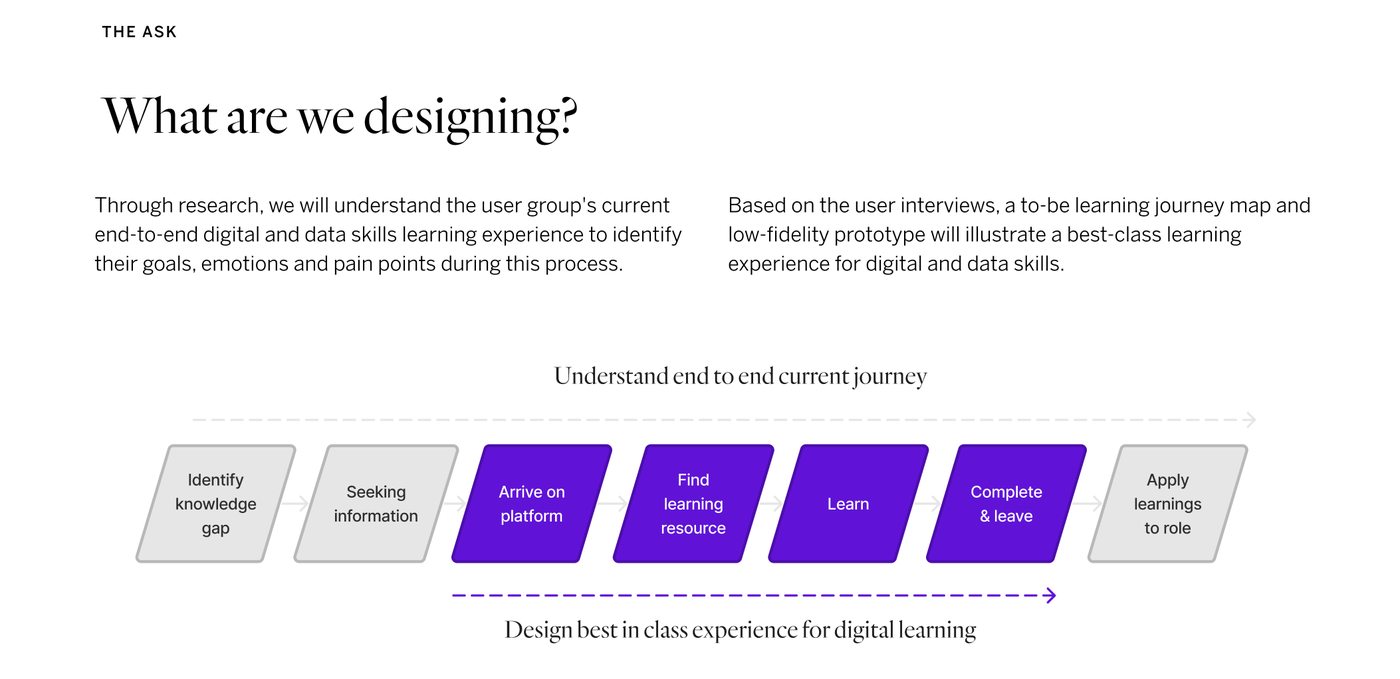
Health and care staff across Scotland were meant to be building their digital skills, but the learning tools available were so hard to use that many had given up, resorting to pen-and-paper notes and scattered tutorials instead.
Approach
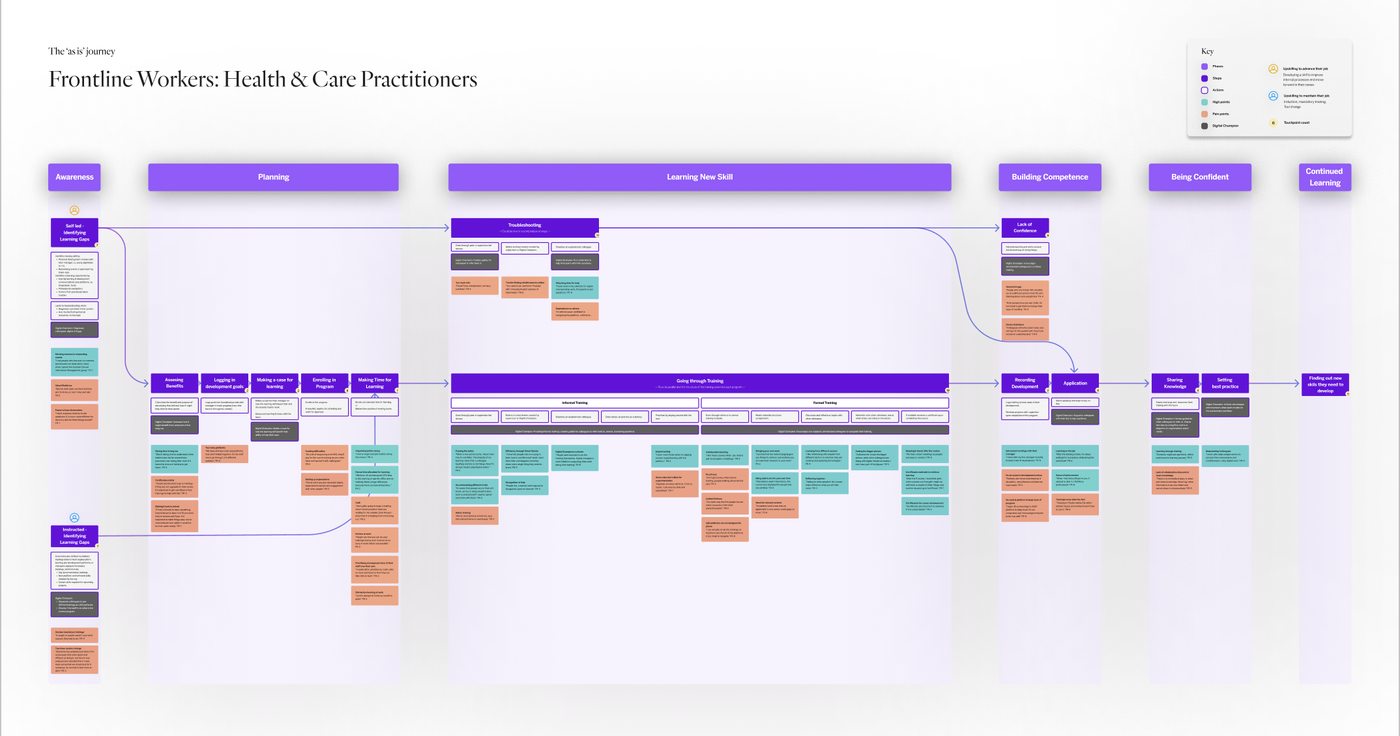
- We ran an eight-week user-centred discovery, interviewing frontline staff about how they actually try to learn digital skills today and where it breaks down, grounding the work in real behaviour rather than assumptions about what staff "should" be doing.
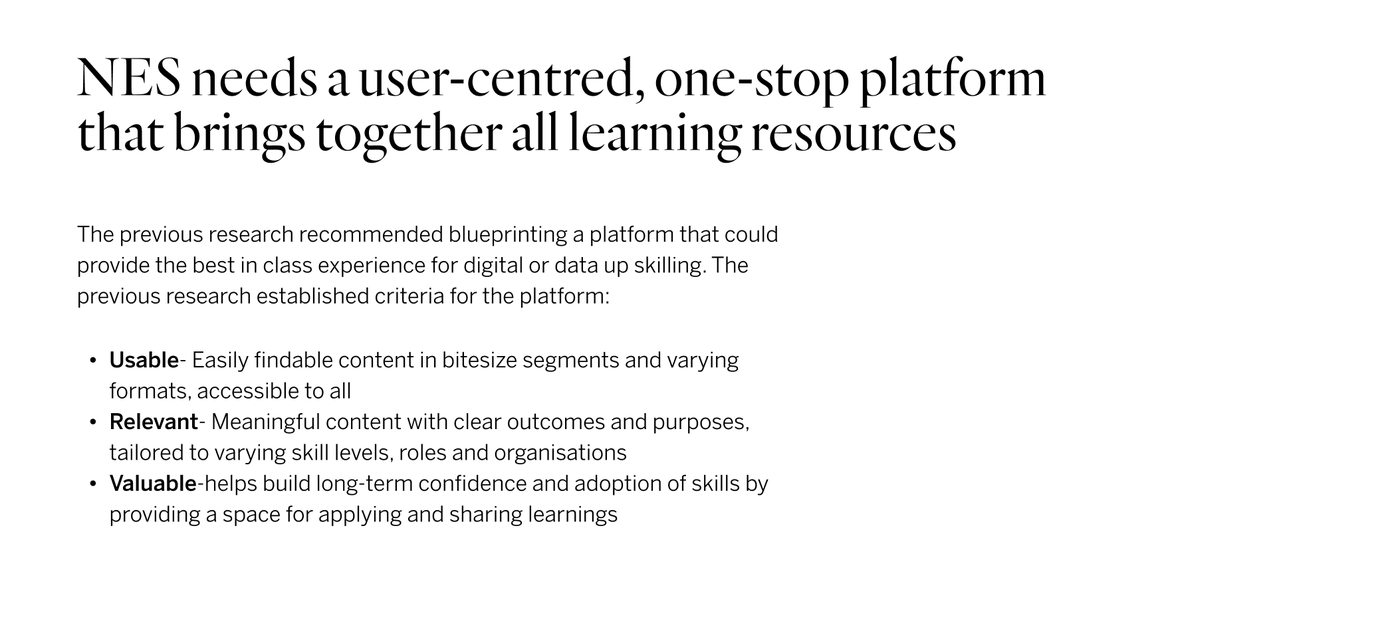
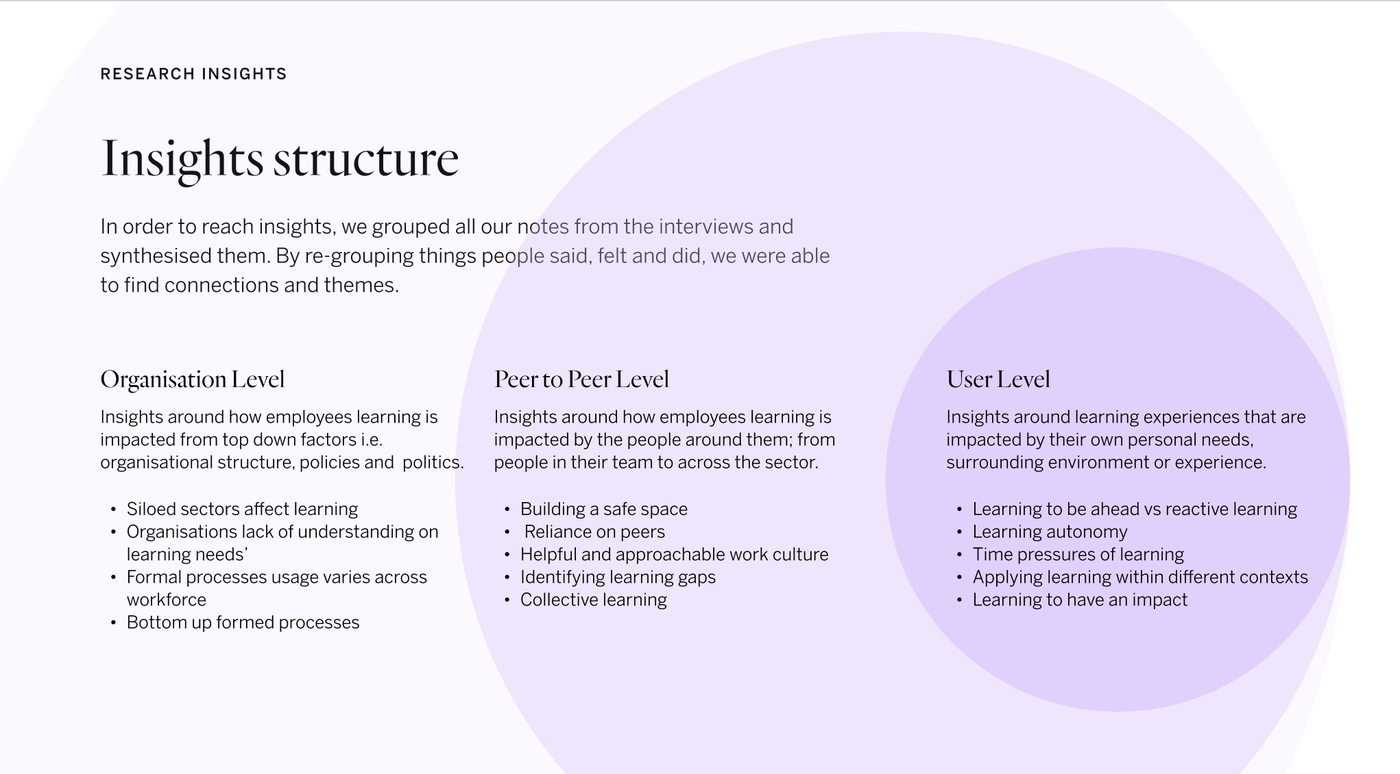
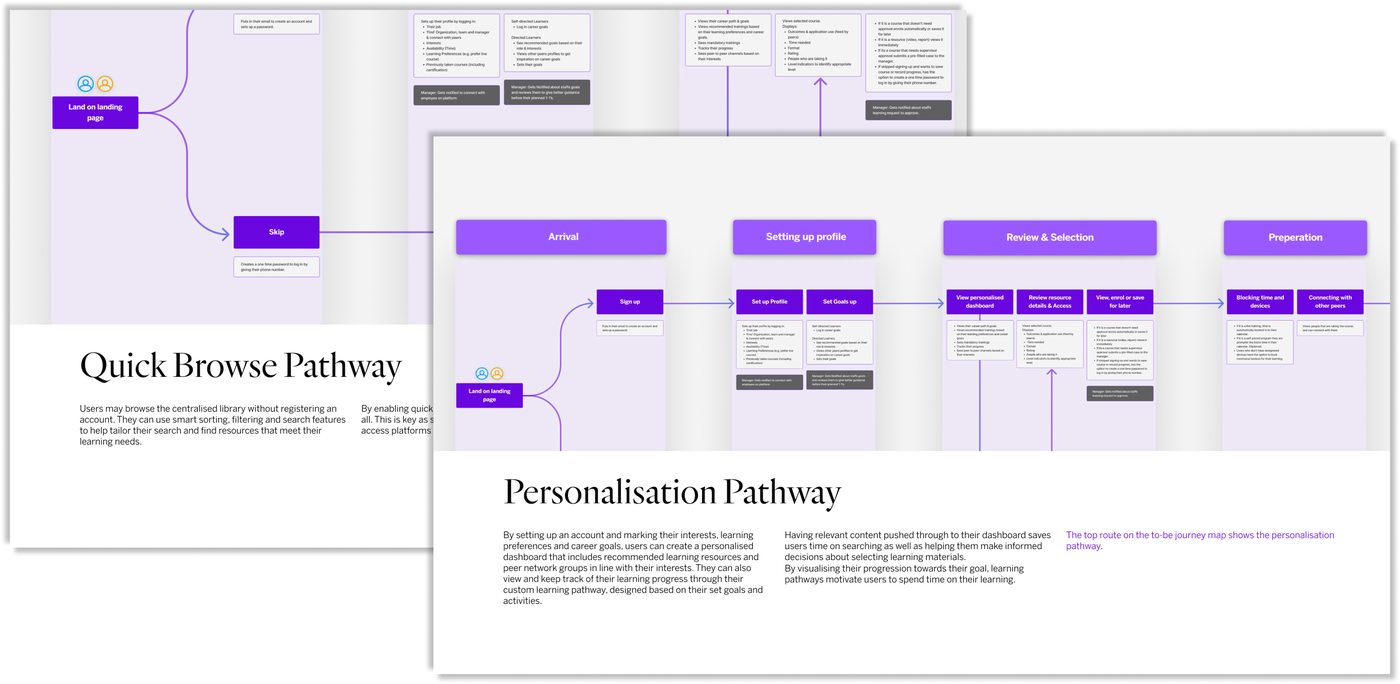
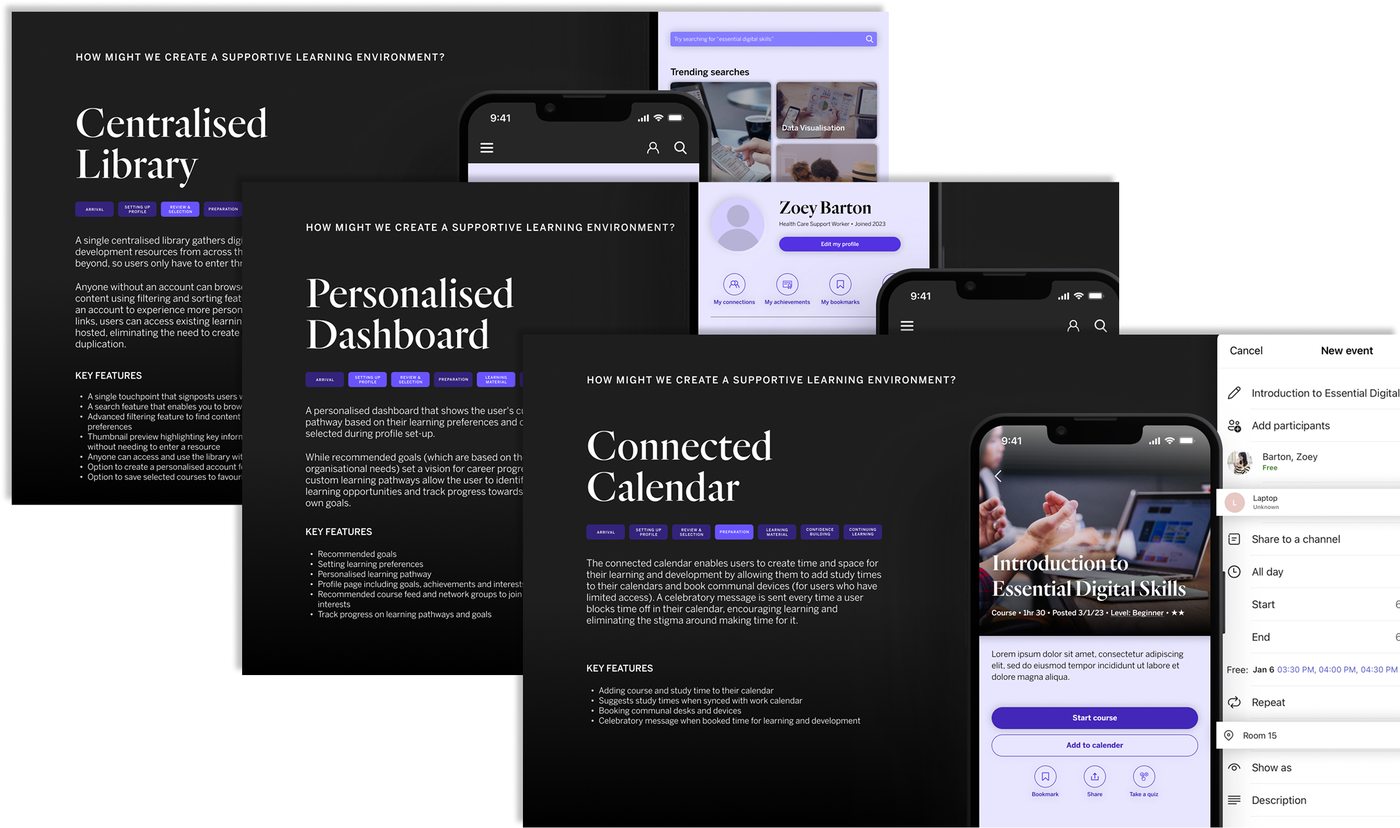
- From that research we designed a service for how staff find, choose and complete learning: one route in rather than scattered sources, tailored to a person's role and stage, reachable in the gaps of a shift rather than only at a desk, and connected to peers doing the same work — each element shaped directly by a barrier staff had described.
- We made the vision tangible enough to be tested and debated: future-state journey maps, a testable prototype of the service, and concept cards across five areas of the experience, so leadership could react to something concrete rather than an abstract strategy.
Outcome & Impact
The work sparked serious conversations among NHS Education for Scotland's senior leadership about building a genuinely user-centred learning service, and was shortlisted for a 2023 Scottish Design Award (Design for Good).
Challenge
An international humanitarian organisation had spent five years pushing the humanitarian sector to take data more seriously, but was now facing tighter budgets, more frequent and complex crises, and pressure to make its approach more locally led. It needed a long-term plan for what came next.
Approach
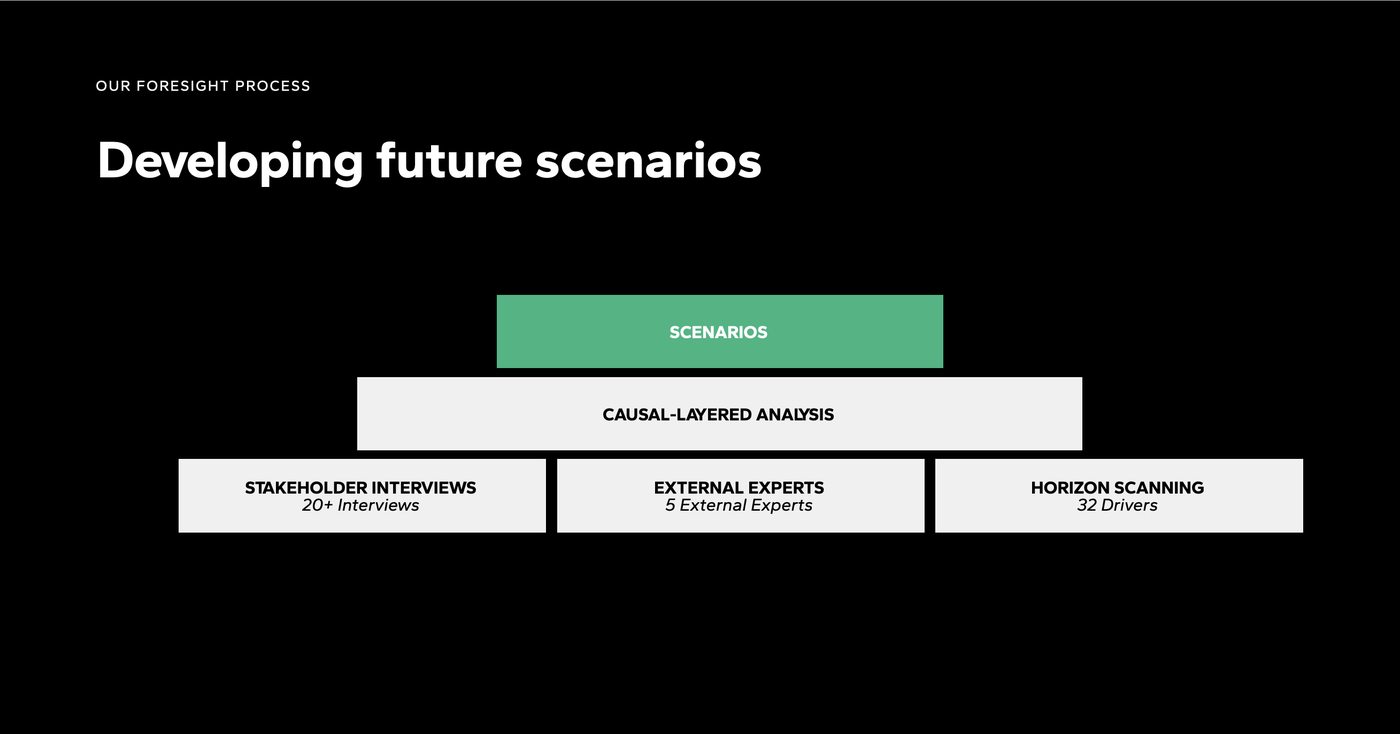
- We interviewed 36 stakeholders spanning the internal team, the wider parent organisation, funders and academic partners, assessing each workstream for strengths, risks, and what was blocking the team.
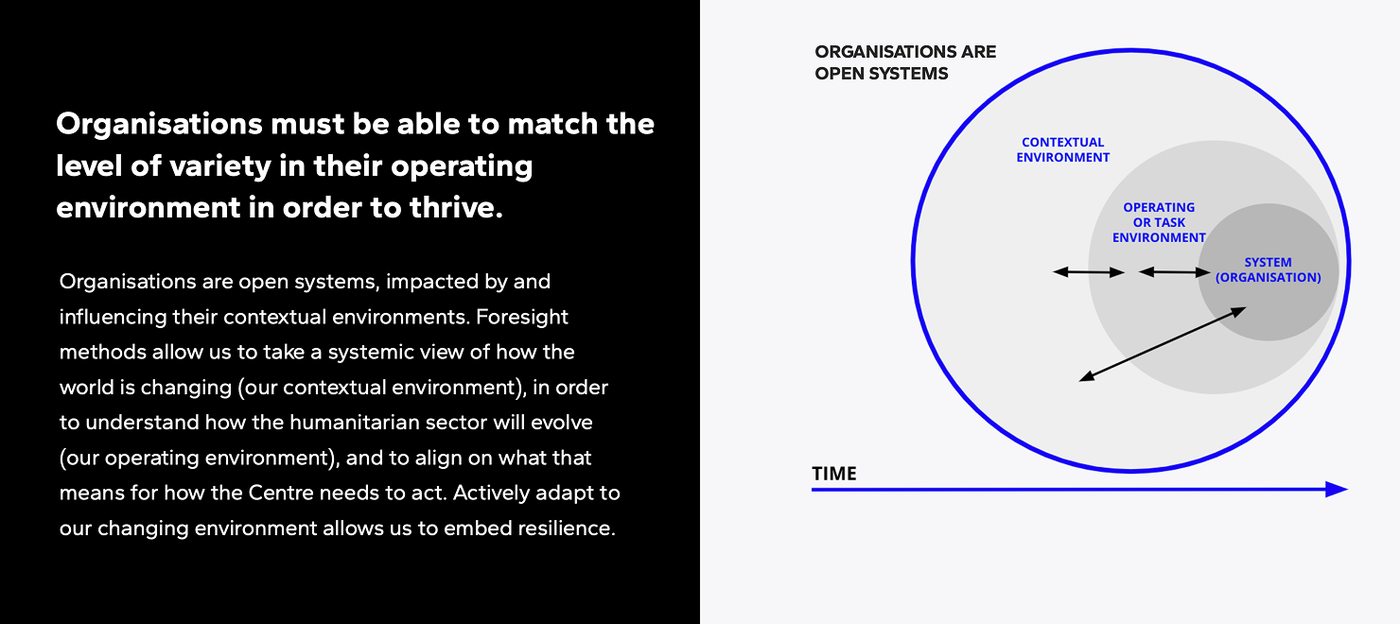
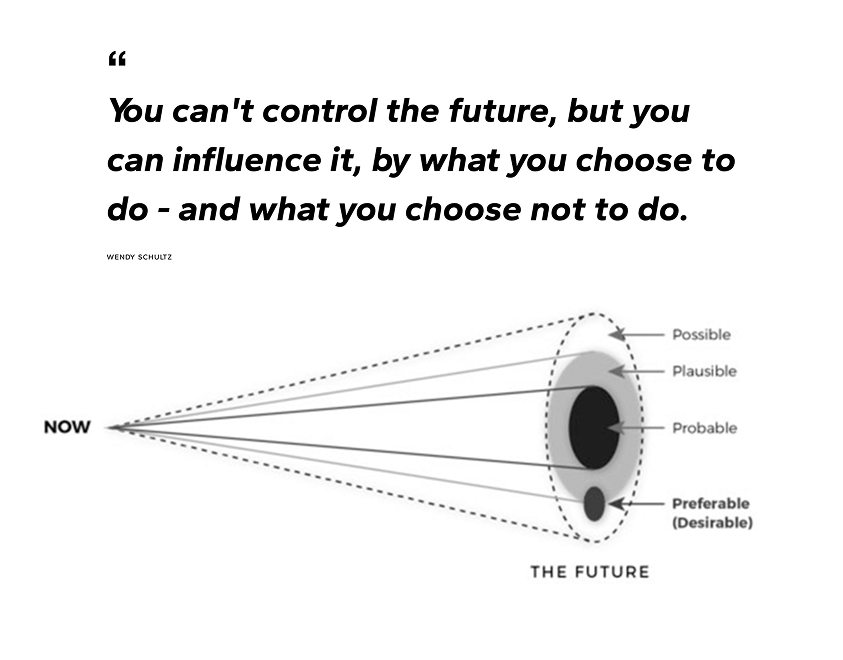
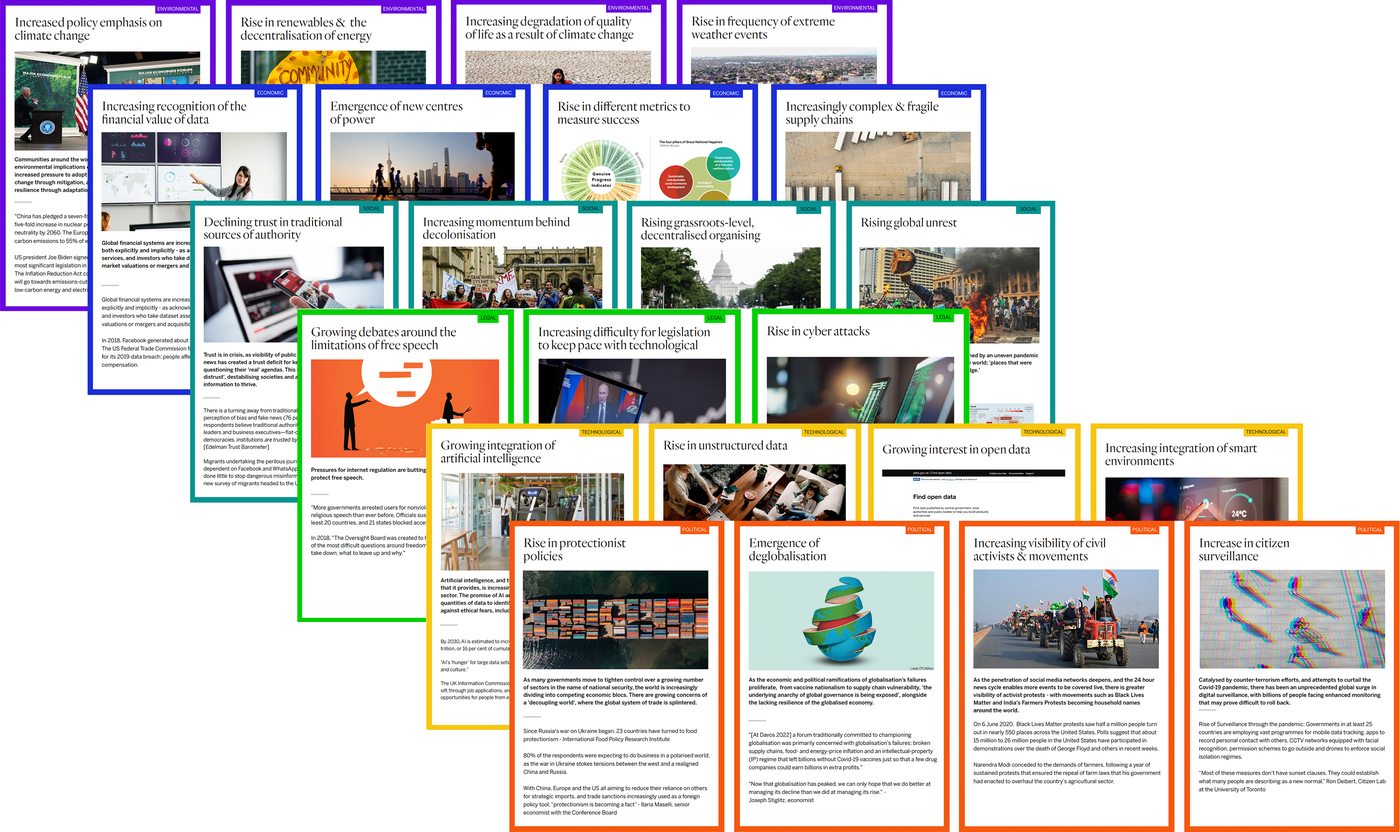
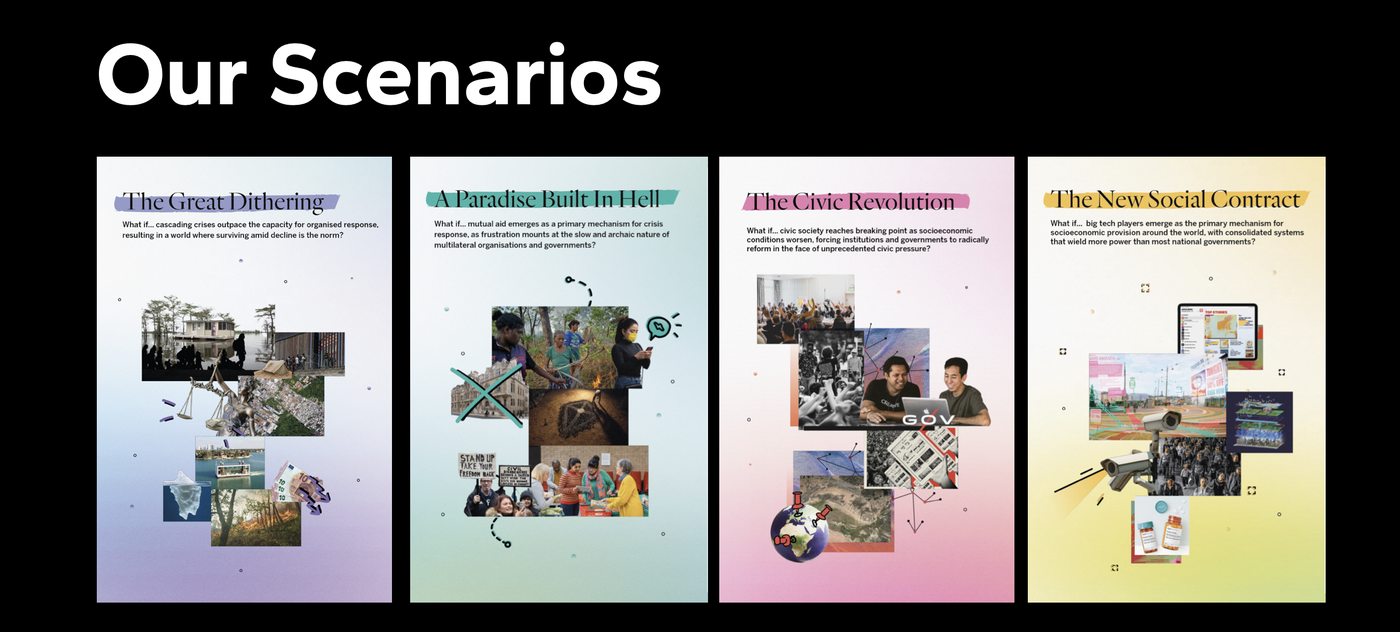
- For the futurecasting workshop, we built four provocative scenarios for the next decade rather than one safe forecast, then had stakeholders stress-test the function's role against each.
- Using a three-horizons structure, we pushed past incremental thinking, then found what held true across all four futures. Six consistent roles emerged.
- The core of the work was synthesis: turning divergent priorities into one direction the whole organisation could stand behind.
Outcome & Impact
The organisation received a ten-year vision and a roadmap of four practical workstreams to get there.
Challenge
The BMW Foundation had a network of 2,100 "Responsible Leaders" across more than 100 countries, and wanted a new way to turn individual leadership development into real, collective action on big societal problems.
Approach
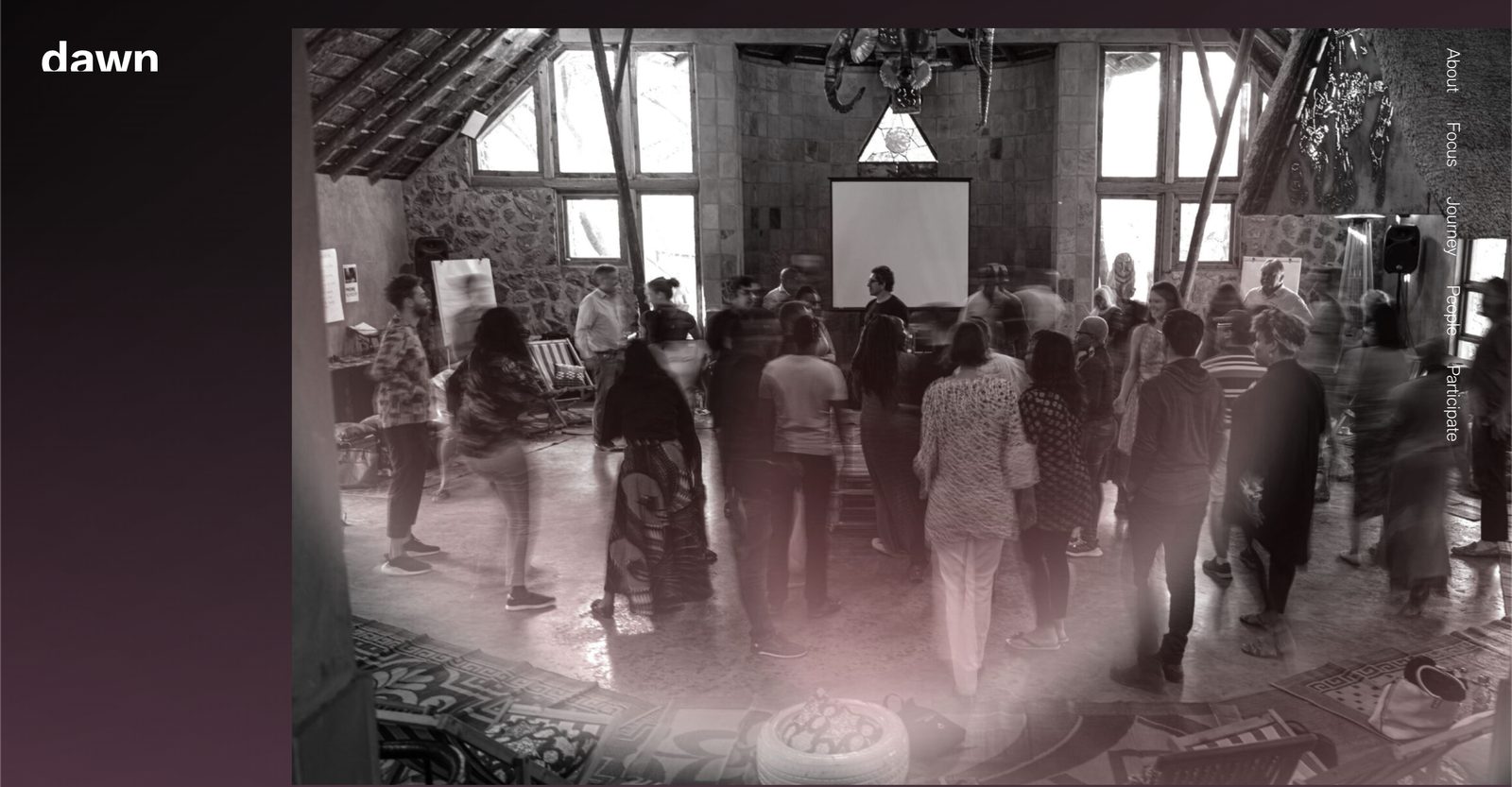
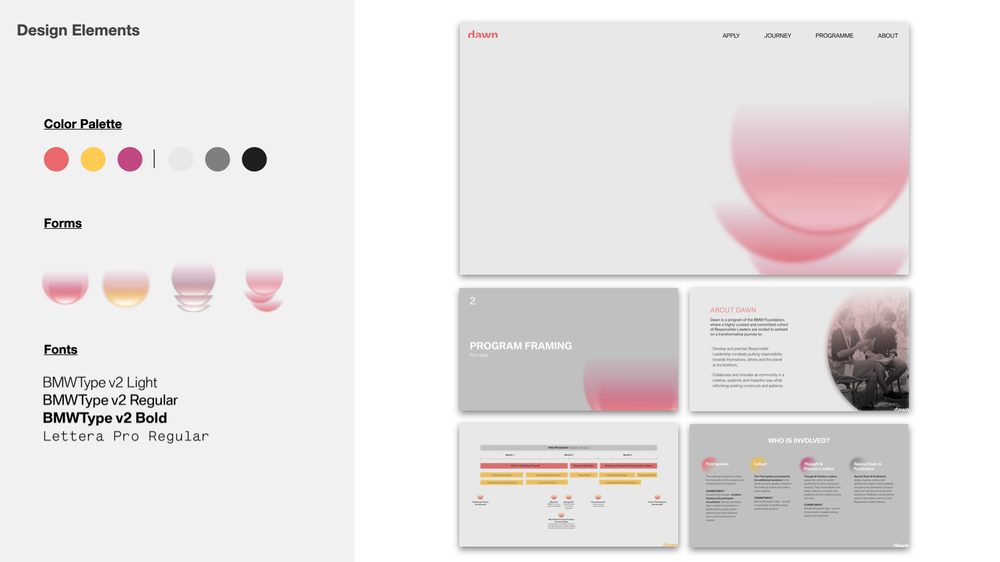
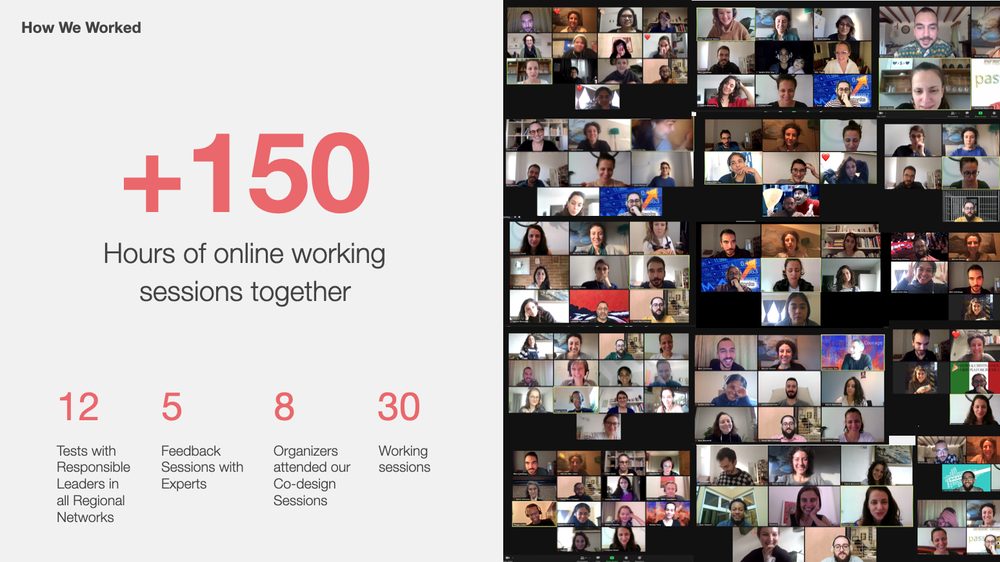
- Designed and facilitated strategy workshops with the Foundation's leadership team and a cohort of 25 leaders, co-creating the vision and purpose of the pilot programme, "dawn." The programme was shaped with its participants, not for them, using the Liberating Structures EcoCycles framework.
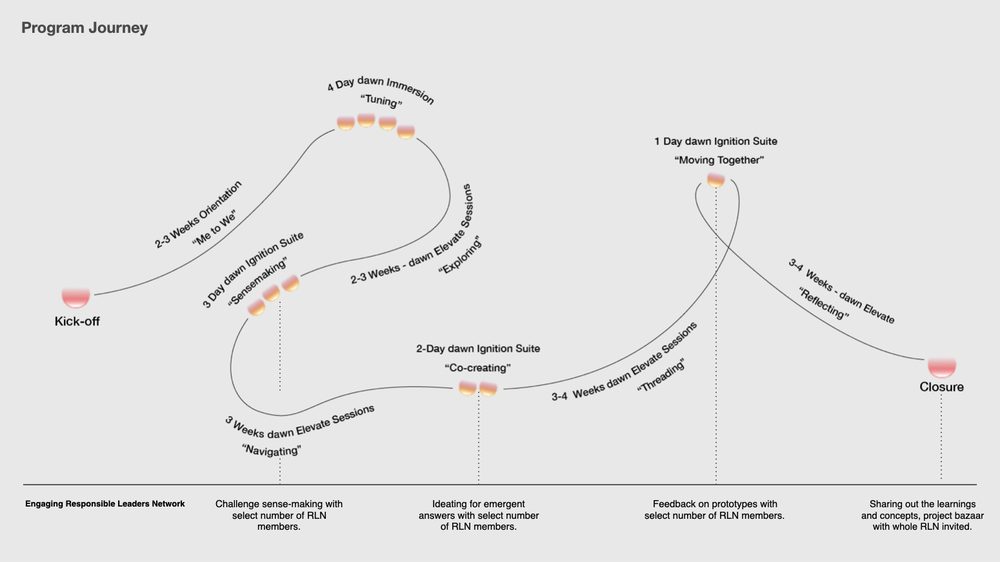
- We built a "responsible leadership" lens into the entire journey: retreats, digital learning sprints, and day-long "Elevation Sessions" covering coordination, teamwork, field research and prototyping, designing the programme as an end-to-end experience rather than a series of events.
Outcome & Impact
The pilot trained 25 leaders, who developed 5 real projects and engaged more than 50 stakeholders, surfacing three new leadership mindsets the Foundation later named "Purposeful Responsibility," "Graceful Navigation," and "Insightful Interdependence." The methodology was adopted to reshape other BMW Foundation programmes.
Challenge
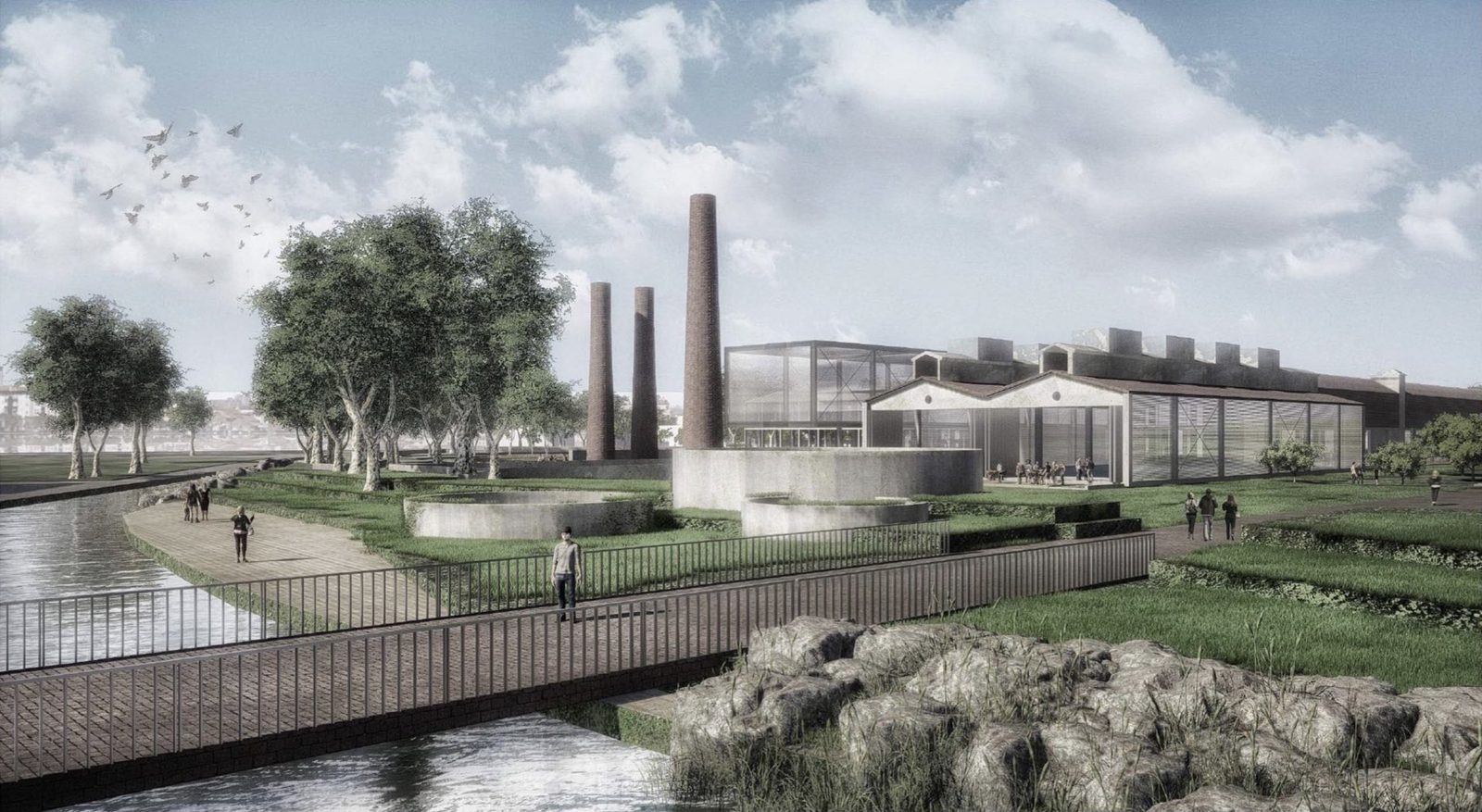
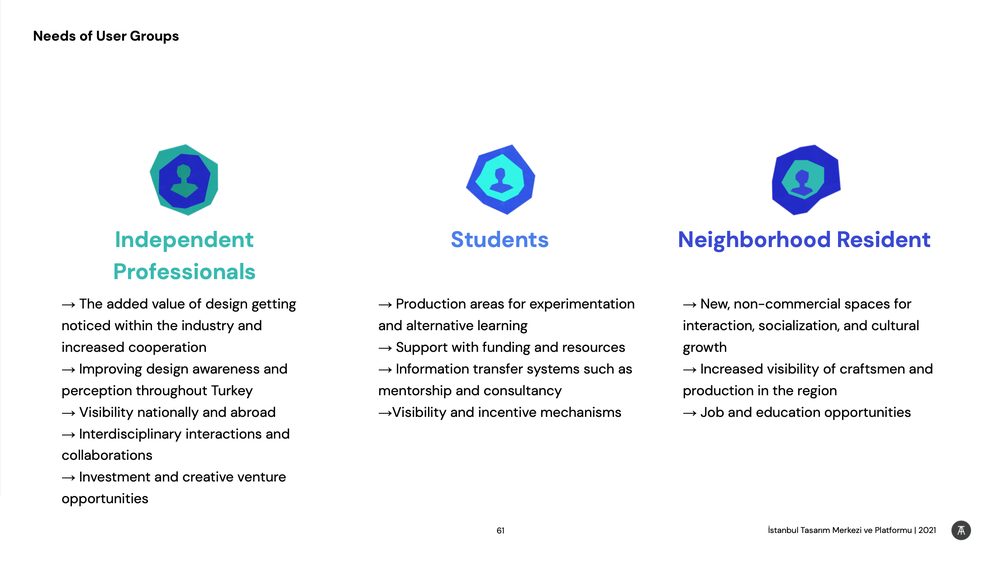
Istanbul's Metropolitan Municipality wanted to turn an old industrial textile factory into a creative campus for the city's design community, as part of a push to be recognised as a UNESCO "City of Design."
Approach
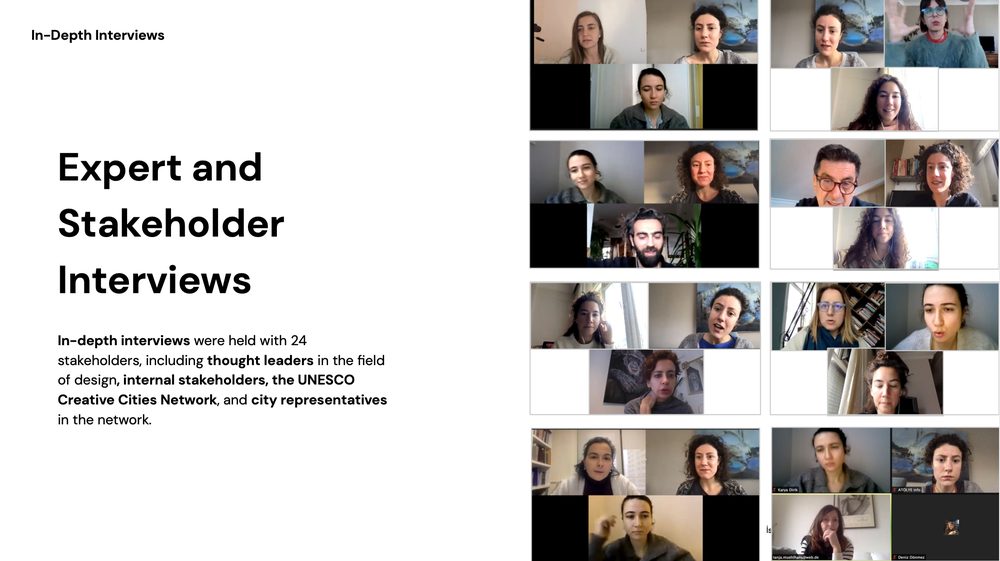
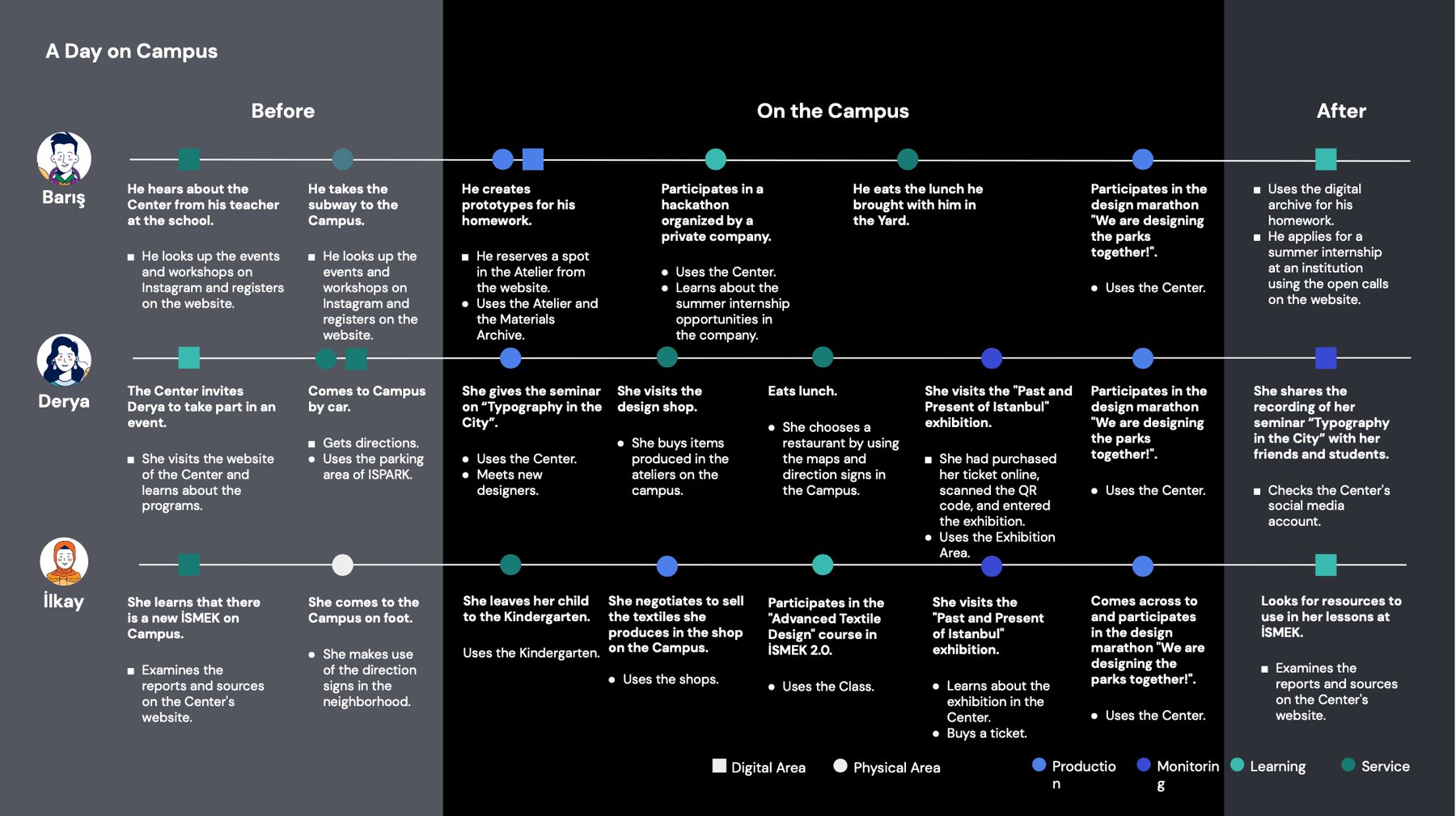
- Participatory design was the method and the point: a civic design centre only works if the community it serves shapes it. We ran 24 in-depth interviews and 4 listening circles with 19 stakeholders and experts, including designers, artists, architects and city officials as well as locals of the neighbourhood the textile factory is in.
- We benchmarked how other cities had built similar design centres, grounding local ambition in international evidence.
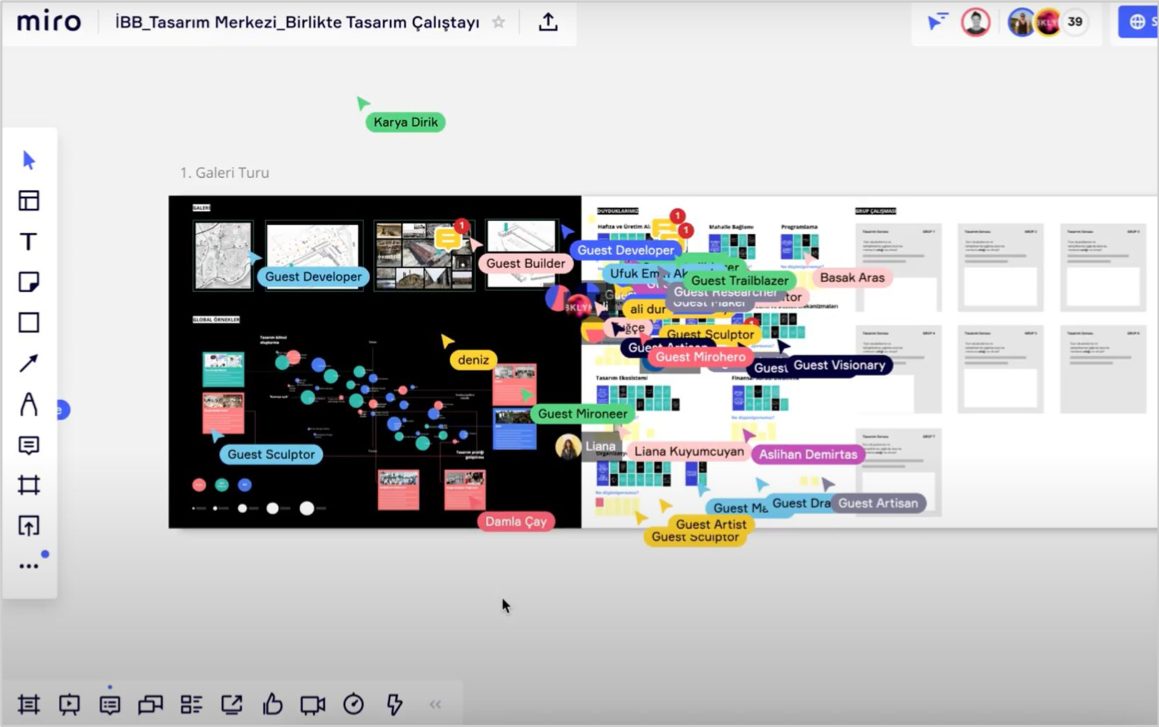
- We facilitated 2 participatory workshops bringing the municipality together with the city's creative community, so the vision was co-created rather than delivered, and we mapped the wider ecosystem the centre would sit within.
Outcome & Impact
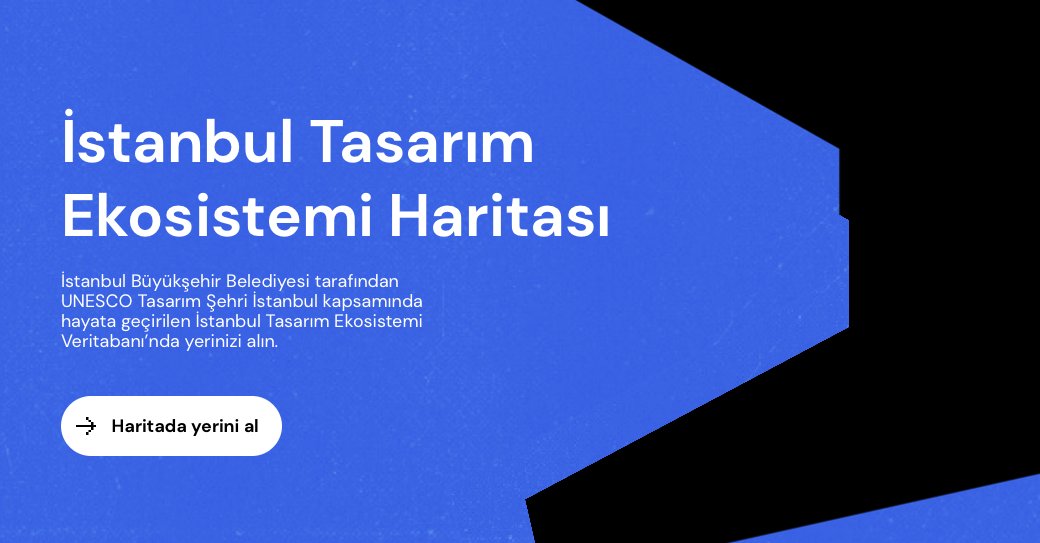
The municipality received a complete operating model for the campus, not just a strategy: a Campus Guide, a brand narrative, personas and journeys for who it would serve, and dedicated strategies for community, programming, governance, space, and digital presence. Alongside it, a new public platform, the Istanbul Design Ecosystem Network, mapped more than 300 design organisations across the city, making Istanbul's creative network visible for the first time.
Challenge
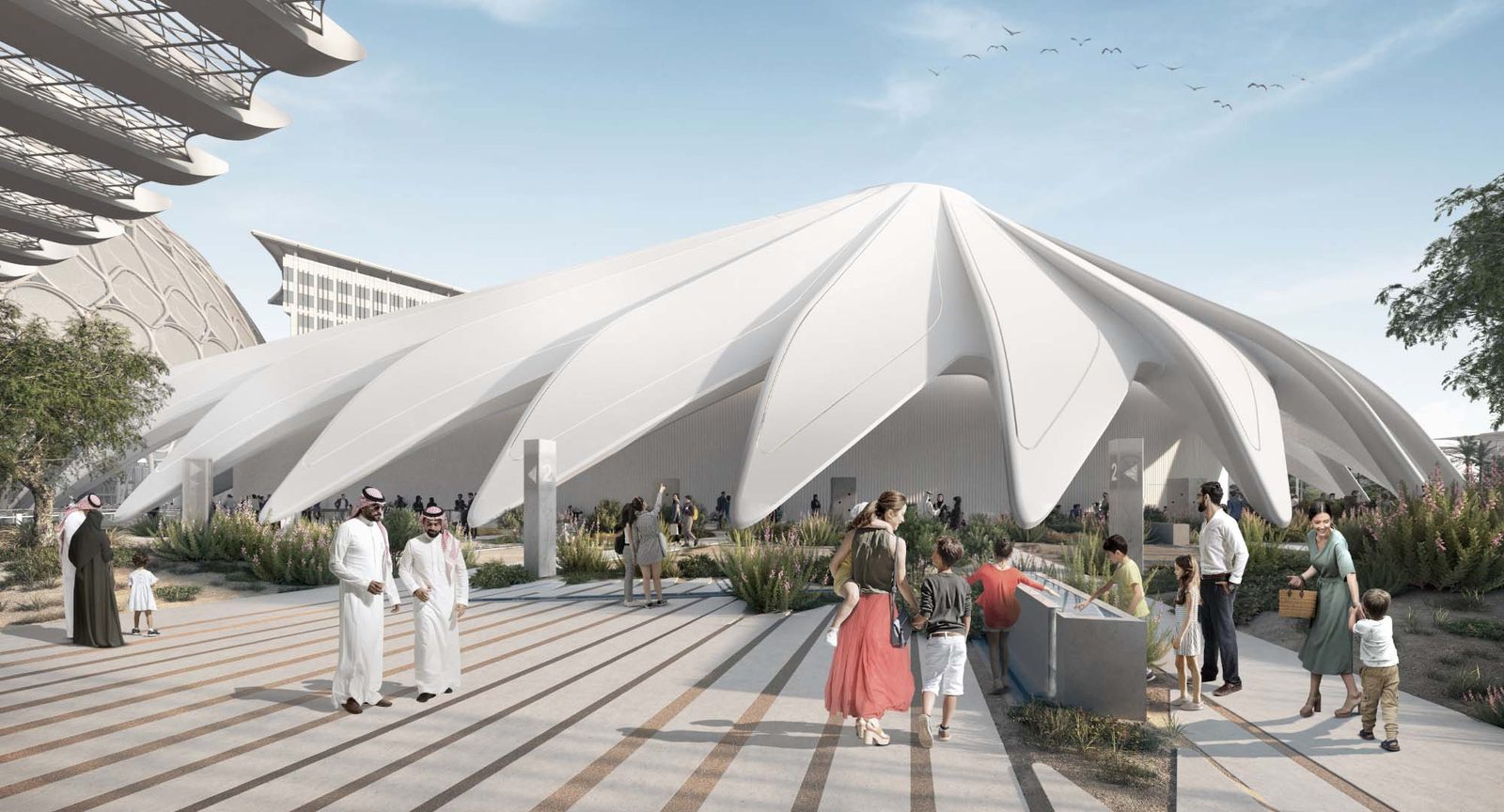
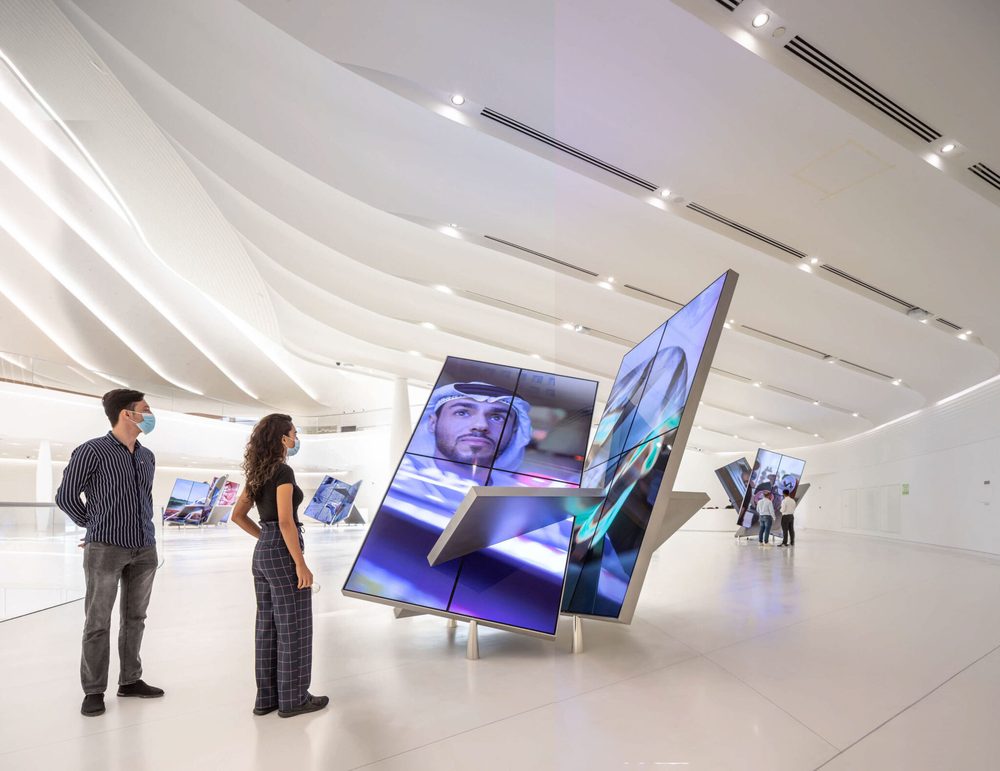
The UAE wanted its national pavilion at Expo 2020 Dubai, ultimately visited more than 24 million times, to bring the country's culture and future ambitions to life for a global audience.
Approach
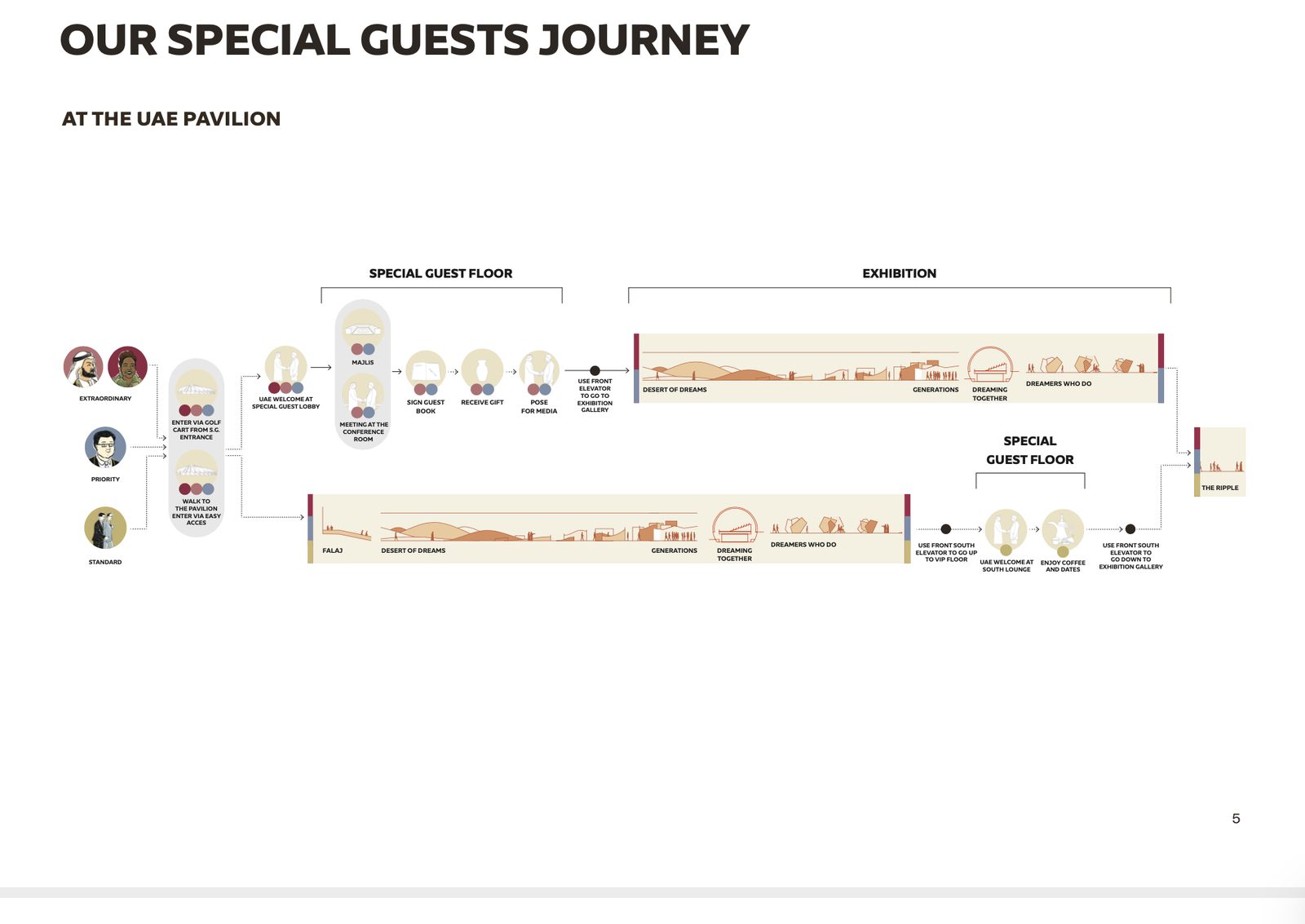
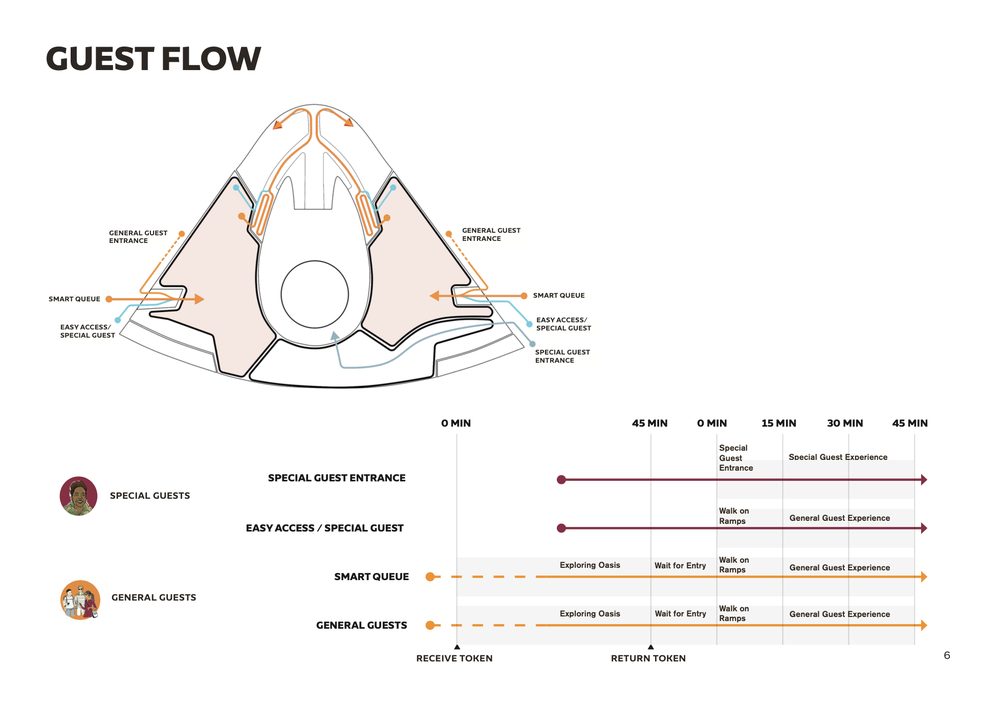
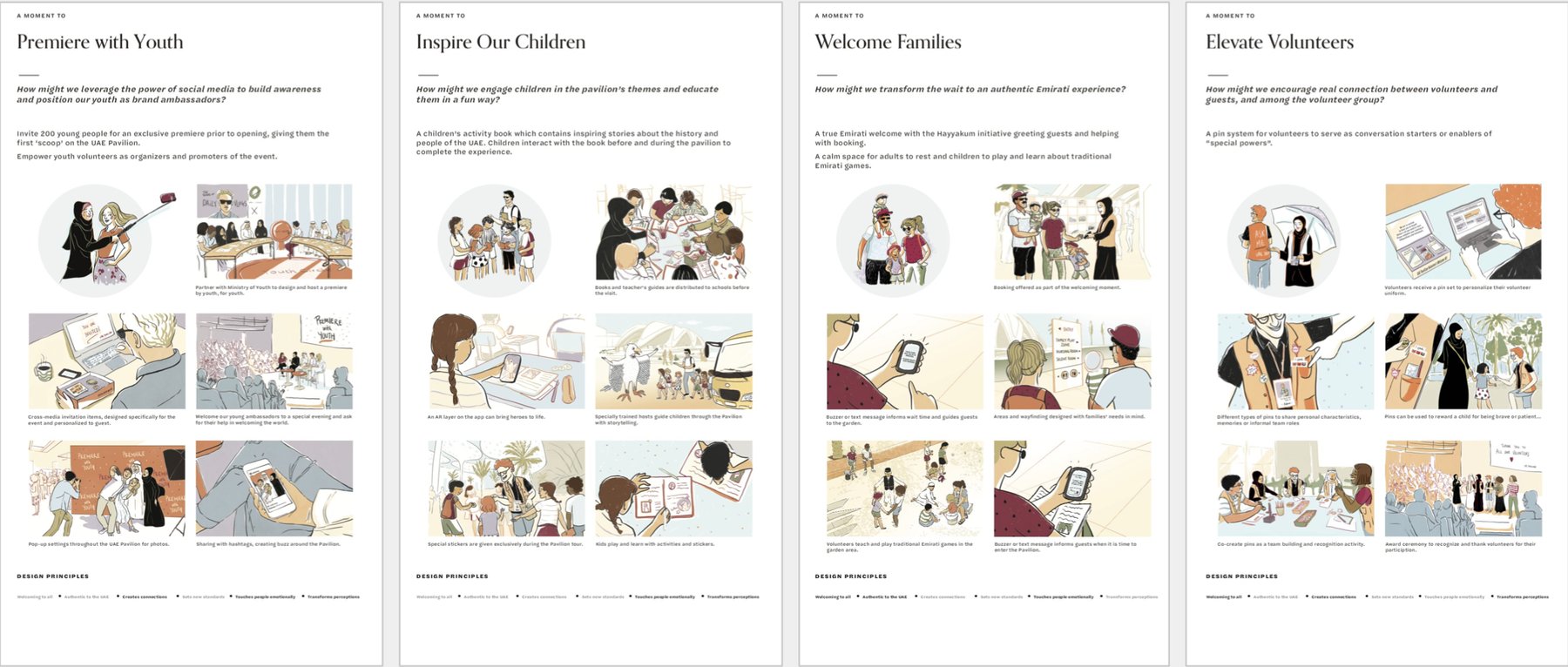
- We ran in-depth research to identify the different kinds of visitors the pavilion would receive, then built a "moments that matter" framework: the pivotal points in a visit where the experience had to land, regardless of a guest's language, expectations, or reason for coming.
- We facilitated strategy workshops with UAE Federal Ministers to shape the pavilion's overall vision, translating national ambition into experience principles at the highest-stakes end of the spectrum.
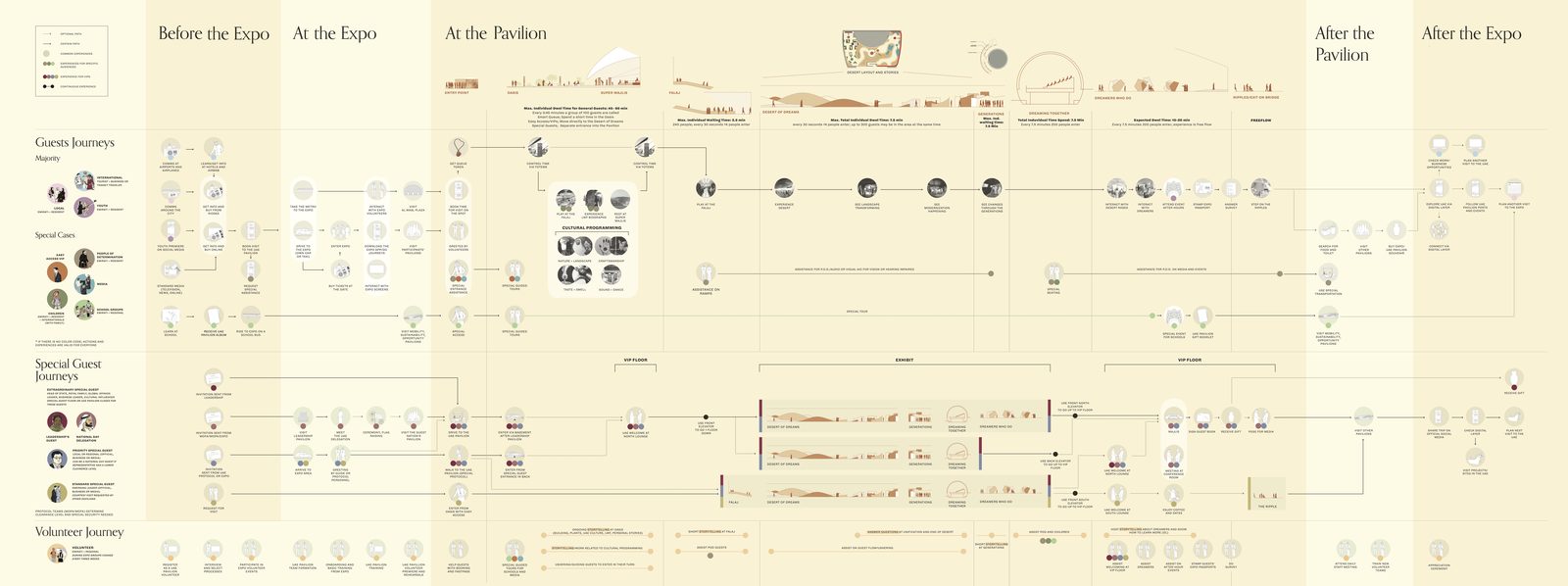
- We built a service blueprint for the live pavilion: the operational choreography connecting every department behind the scenes to the experience guests would feel front of stage, service design's core move of making the invisible machinery of an experience explicit so it can be run, staffed and sustained.
Outcome & Impact
The research, visitor typology, and moments-that-matter framework became the experience-design brief that guided the pavilion's development, carried into the built guest experience by the pavilion's execution partners. Over 24 million visits between October 2021 and March 2022 made it one of Expo 2020's most-visited pavilions, a global stage for the strategy and briefs this work produced.